Critically analyse the fiscal implications of relying on non-tax revenues like RBI surplus and PSB dividends for resource mobilisation. How does this impact long-term capital formation?
Relying on non-tax revenues such as RBI surplus and PSB dividends has given the Union Government useful fiscal room without raising taxes. Yet, this is a cyclical and limited source of funds, not a stable substitute for broad-based revenue mobilisation.
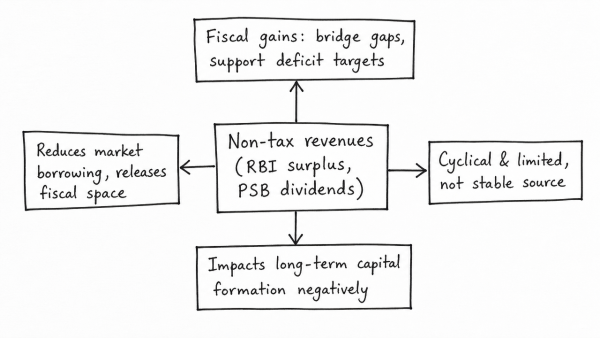
- Fiscal gains: Record transfers from the RBI and higher PSB dividends help bridge revenue gaps, support fiscal deficit targets and reduce immediate market borrowing. This can release space for public capital expenditure.
- Why it matters now: With lower tax buoyancy and uneven disinvestment receipts, such receipts have become an important cushion for the budget.
| Benefit | Risk |
| Lower borrowing pressure | Volatility of RBI surplus and bank profits |
| More room for capex | Dependence on one-off gains |
| Short-term deficit management | Weaker fiscal predictability |
- Concerns: Excessive dependence may encourage fiscal complacency and obscure the need for tax reform. RBI surplus is tied to market conditions, forex movements and balance-sheet decisions; PSB dividends depend on profitability, asset quality and credit growth.
- Institutional costs: If the RBI retains too little buffer, financial stability may weaken. If PSBs are pushed for high payouts, their internal capital accretion and lending capacity may suffer.
Impact on long-term capital formation: In the short run, these revenues can finance roads, railways and other productive assets. But if they replace durable tax mobilisation, the result may be under-investment in institutional strength, weaker bank balance sheets and a future need for higher debt. Thus, they should be treated as supplementary, not structural, sources of capital formation.
Originally written on
September 13, 2026
and last modified on
September 13, 2026.