COVID-19 pandemic accelerated class inequalities and poverty in India. Comment. (UPSC 2020)
The COVID-19 pandemic did not create inequality in India, but it sharply deepened existing class divides. The shock hit the poor, informal workers and small businesses hardest, while organised and digital sectors recovered faster, producing a K-shaped recovery.
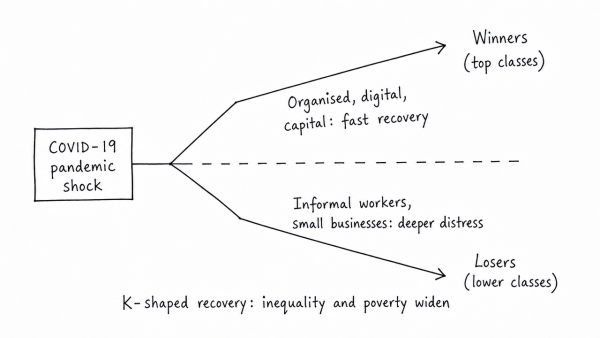
- Job loss and informality: Lockdowns wiped out daily wage work, street vending and service jobs. Many workers shifted to low-paid self-employment or agriculture, with women facing greater unpaid and insecure work.
- Income, wealth and poverty: Corporate profits and asset values rose faster than wages, while low-paid workers saw stagnant real earnings amid inflation. Free food and cash support prevented mass hunger, but school closures, digital gaps and health costs deepened long-term deprivation.
Thus, the pandemic exposed and widened structural inequality; only broad-based job creation, strong social protection and skill investment can reduce poverty sustainably.
Originally written on
September 2, 2026
and last modified on
September 2, 2026.