Comment on the challenges for inclusive growth which include careless and useless manpower in the Indian context. Suggest measures to be taken for facing these challenges. (UPSC 2016)
Inclusive growth is hampered when a large section of India’s manpower is unskilled, disengaged or unemployable, turning the demographic dividend into a liability. Growth then remains concentrated in modern sectors while most workers stay in low-paid informal jobs or unemployment.
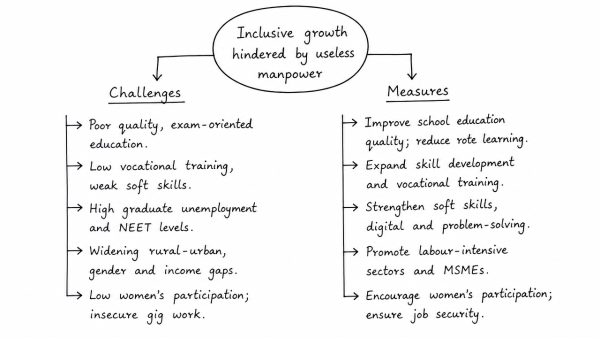
- Challenges: Poor quality and exam-oriented education create a mismatch between degrees and jobs. Low vocational training, weak soft skills, and limited problem-solving make many youth unemployable; graduate unemployment and NEET levels remain high. This widens rural-urban, gender and income gaps, while women’s low labour force participation and insecure gig work reduce inclusion.
- Measures: Reform school and higher education with foundational learning, digital skills, apprenticeships and industry-linked curricula. Expand ITIs, short courses and recognition of prior learning, especially for manufacturing, care, green and digital jobs. Promote female employment through safe transport, childcare, flexible work and equal pay. Strengthen social security, employment services and placement support, and boost labour-intensive sectors such as textiles, food processing and construction.
India must convert manpower into skilled, productive and secure human capital for inclusive growth.
Originally written on
August 30, 2026
and last modified on
August 30, 2026.