Coastal sand mining, whether legal or illegal, poses one of the biggest threats to our environment. Analyze the impact of sand mining along the Indian coasts, citing specific examples. (UPSC 2019)
Coastal sand mining disturbs beaches, dunes and near-shore ecosystems, causing erosion, saline intrusion, biodiversity loss and weaker protection against cyclones and storm surges.
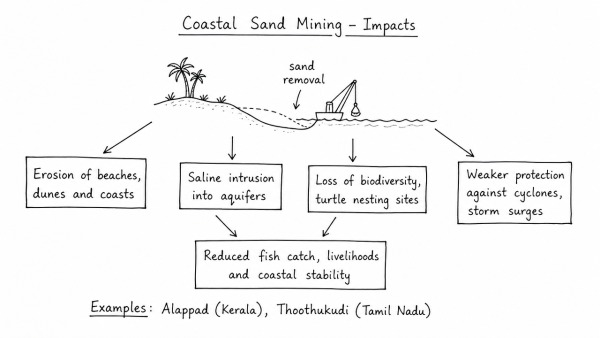
- Damage: Removing sand lowers beaches and destroys natural barriers, making coastlines more erosion-prone; dredging near river mouths also allows seawater into aquifers, harming drinking water and crops.
- Ecology and livelihoods: Turbidity reduces sunlight, damages seabed life and turtle nesting sites, while fishers lose catch, boat-landing space and nets.
Examples: Alappad in Kerala has suffered severe land loss due to black sand mining; illegal mining in Thoothukudi, Tamil Nadu, triggered legal action; in East Godavari, Andhra Pradesh, mining led to seawater intrusion and CRZ damage. Hence, coastal sand mining is a serious environmental and livelihood threat requiring strict zoning, scientific permits and enforcement.
Originally written on
September 1, 2026
and last modified on
September 1, 2026.