Capitalism has guided the world economy to unprecedented prosperity. However, it often encourages short-sightedness and contributes to wide disparities between the rich and the poor. In this light, would it be correct to believe and adopt capitalism for bringing inclusive growth in India? Discuss. (UPSC 2014)
Capitalism can generate growth, innovation and efficiency, and market reforms have helped India raise GDP. But by itself it cannot ensure equity; benefits often concentrate, while jobs, assets and opportunities remain uneven.
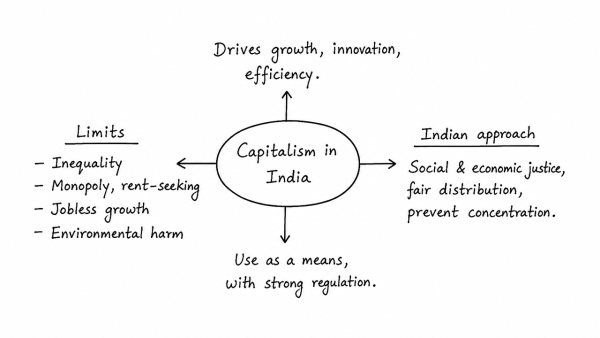
- Limits: Unregulated markets can deepen inequality, monopoly power, rent-seeking, jobless growth and environmental harm. India’s high growth has not automatically translated into equal gains for all.
- Indian model: The Constitution demands social and economic justice, fair distribution of resources and prevention of concentration of wealth, so India cannot follow laissez-faire capitalism.
Therefore, capitalism should be used as a tool within a mixed economy, backed by welfare, progressive taxation, quality public services, labour-intensive growth and targeted support, so that growth becomes inclusive.
Originally written on
August 29, 2026
and last modified on
August 29, 2026.