Can the vicious cycle of gender inequality, poverty and malnutrition be broken through microfinancing of women SHGs? Explain with examples. (UPSC 2021)
Microfinancing through women’s Self-Help Groups can help break the vicious cycle, but only when it is linked with assets, market access and nutrition support. By giving women control over savings and credit, SHGs improve bargaining power, reduce poverty and often raise spending on food, health and children’s education.
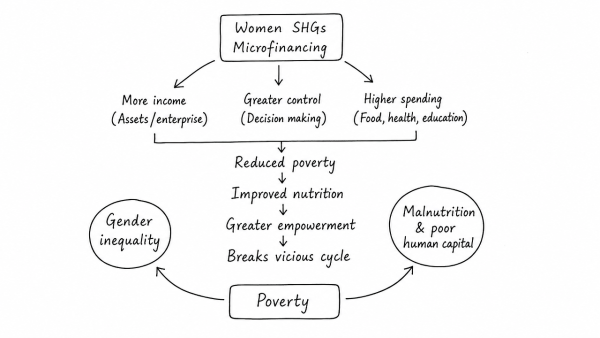
- Gender inequality: SHGs build confidence, leadership and collective voice. In Bihar’s JEEViKA, women have become village-level decision makers and entrepreneurs.
- Poverty: Microcredit supports petty trade, dairy, stitching and food processing. Kudumbashree in Kerala has helped many women earn regular incomes and improved household resilience.
- Malnutrition: SHGs linked with nutrition activities, kitchen gardens and take-home ration units improve dietary diversity. In some states, women-led SHGs supply supplementary food to anganwadis.
However, microfinance alone is not enough. Without fair wages, social security, health services and protection from debt traps, it may not change entrenched patriarchy. Thus, SHG-based microfinance is a strong tool, but not a standalone solution.
Originally written on
September 2, 2026
and last modified on
September 2, 2026.