Can overuse and free availability of antibiotics without Doctor’s prescription, be contributors to the emergence of drug-resistant diseases in India? What are the available mechanisms for monitoring and control? Critically discuss the various issues involved. (UPSC 2014)
Yes. Easy over-the-counter access and self-medication in India strongly drive antimicrobial resistance. Incomplete courses, wrong doses and use for viral illnesses kill susceptible bacteria and leave resistant strains to survive.
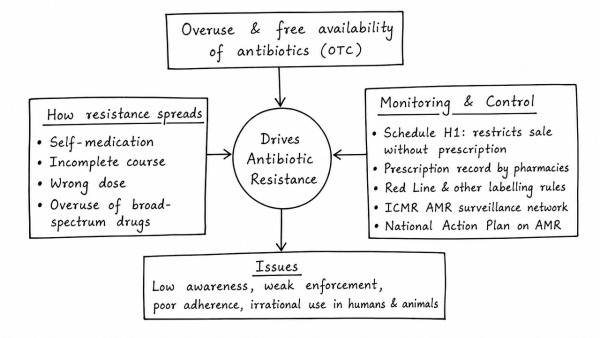
- How resistance spreads: misuse in humans, poor adherence, and heavy use of broad-spectrum drugs in informal care accelerate selection of resistant pathogens.
- Monitoring and control: Schedule H1 restricts sale of certain antibiotics; pharmacies must keep prescription records. The Red Line and other labelling rules warn buyers. ICMR’s AMR surveillance network tracks resistance trends, while the National Action Plan on AMR promotes a One Health approach.
- Key issues: weak enforcement, shortage of inspectors, public ignorance, irrational prescribing, and antibiotic use in livestock and aquaculture. Poor wastewater control from pharma units also adds to resistance.
Thus, overuse and free availability are major contributors, but control needs stricter regulation, better diagnostics, public awareness, and coordinated action across human, animal and environmental sectors.
Originally written on
August 29, 2026
and last modified on
August 29, 2026.