Bringing out the circumstances in 2005 which forced amendment to Section 3(d) in Indian Patent Law, 1970, discuss how it has been utilized by the Supreme Court in its judgement in rejecting Novartis’ patent application for ‘Glivec’. Discuss briefly the pros and cons of the decision. (UPSC 2013)
Section 3(d) was amended in 2005 after India had to open its WTO-TRIPS “mailbox” for pharmaceutical product patents. The aim was to prevent evergreening of old medicines through minor changes while safeguarding public health and access to affordable drugs.
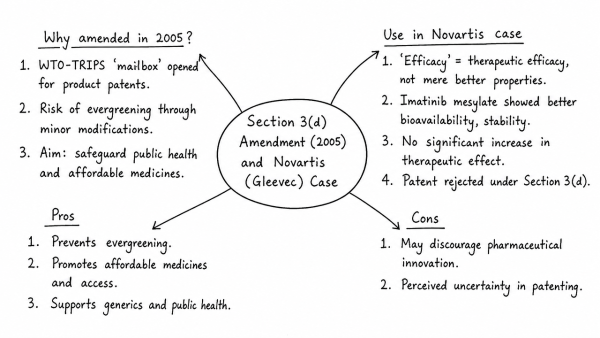
Use in Novartis case: In Novartis v. Union of India, the Supreme Court held that “efficacy” under Section 3(d) means therapeutic efficacy, not merely improved physical or chemical properties. Novartis’ beta crystalline imatinib mesylate showed better bioavailability and stability, but not a significant increase in therapeutic effect over the known substance, so its patent claim was rejected.
Pros and cons: The ruling strengthened generic medicine access and curbed patent abuse, but it may also discourage incremental pharmaceutical innovation and create uncertainty for genuine improvements.