Analyse the socio-economic vulnerabilities of coastal communities displaced by rising sea levels. How can rights-based policies ensure their rehabilitation and food security?
Rising sea levels are turning slow-onset climate stress into forced displacement for many coastal households. The impact is not limited to loss of place; it triggers deeper social and economic insecurity, especially where livelihoods depend on land and the sea.
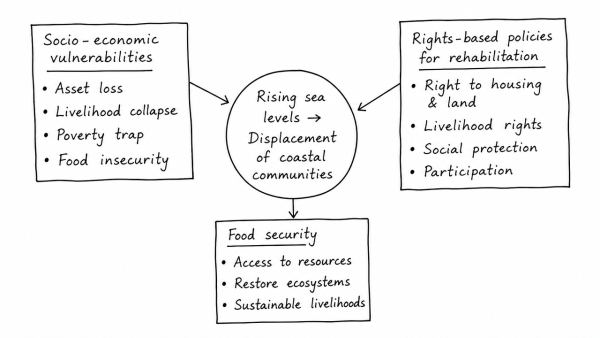
- Key vulnerabilities
- Asset loss: Homes, farms, ponds and common lands are lost to erosion, flooding and salinisation.
- Livelihood collapse: Fishing, farming and tourism suffer from degraded ecosystems, falling fish stocks, damaged soil and freshwater scarcity.
- Poverty trap: Displaced families often move into low-paid informal work with no social security, raising exploitation risks.
- Social distress: Women, children and the elderly face higher risks of violence, poor health and loss of community support.
- Food insecurity: Reduced local production, price shocks and unsafe water worsen nutrition and hunger.
- Rights-based policy response
- Legal recognition: Define climate-displaced persons and make rehabilitation a duty under the right to life, dignity and equality.
- Participatory resettlement: Involve affected communities in site selection, housing design and livelihood planning.
- Livelihood restoration: Provide skill training, credit, fishing access, climate-resilient farming and support for women-led enterprises.
- Food security: Ensure portable ration benefits, nutrition support, kitchen gardens, salt-tolerant crops and safe drinking water.
- Social protection: Extend health cover, education, wage security and disaster insurance to migrant households.
- Ecosystem-based adaptation: Restore mangroves, dunes and wetlands to reduce future displacement and protect food systems.
A rights-based approach shifts policy from relief to justice. It ensures that rehabilitation restores livelihood, identity and dignity, while food security is protected through secure entitlements, resilient ecosystems and accountable state action.
Originally written on
September 12, 2026
and last modified on
September 12, 2026.