An athlete participates in Olympics for personal triumph and nation’s glory; victors are showered with cash incentives by various agencies, on their return. Discuss the merit of state sponsored talent hunt and its cultivation as against the rationale of a reward mechanism as encouragement. (UPSC 2014)
Olympic success is both an individual triumph and a source of national pride. Therefore, sports policy must balance preparation and recognition; one creates winners, the other sustains motivation.
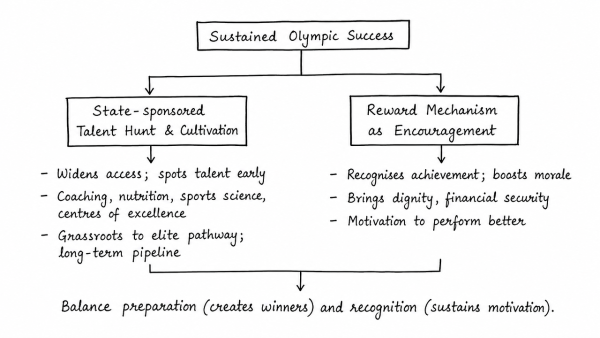
- State-sponsored talent hunt: It widens access by spotting children from rural, tribal and poor families. Early coaching, nutrition, sports science and centres of excellence help convert raw talent into elite performance.
- Better use of public money: Investment in grassroots systems, school sports and pathways like Khelo India builds a long-term pipeline for future Olympians, instead of depending on rare individual breakthroughs.
- Reward mechanism: Cash prizes, pensions and welfare support reward excellence, honour sacrifice and make sport a viable career. They also encourage younger athletes to aim higher.
- Limitations: Excessive post-victory rewards can create inequality across States and favour already successful athletes, while ignoring those who lack training support.
A sound policy must prioritise state-backed talent identification and cultivation, backed by fair rewards for achievers. This hybrid approach builds sporting depth, equity and a lasting medal culture.
Originally written on
August 29, 2026
and last modified on
August 29, 2026.