Adoption of PPP model for infrastructure development of the country has not been free of criticism. Critically discuss pros and cons of the model. (UPSC 2013)
PPP has become a key instrument for roads, ports, airports and urban infrastructure, combining public purpose with private capital, technology and management.
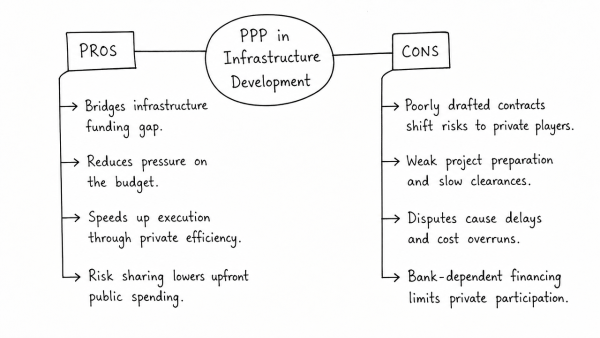
- Pros: It bridges the infrastructure funding gap, reduces pressure on the budget, and can speed up execution through private efficiency and accountability.
- Risk sharing, including models like Hybrid Annuity, lowers upfront public spending and may improve asset maintenance.
- Cons: Poorly drafted contracts often shift demand, land and regulatory risks unfairly to private players.
- Weak project preparation, slow clearances and disputes cause delays and cost overruns, while bank-dependent financing stresses both firms and banks.
- High user charges can reduce equity, and regulatory uncertainty discourages investment.
Thus, PPP works best with realistic project design, fair risk allocation, strong regulation and speedy dispute resolution.
Originally written on
August 29, 2026
and last modified on
September 7, 2026.