‘A national Lokpal, however strong it may be, cannot resolve the problems of immorality in public affairs.’ Discuss. (UPSC 2013)
A strong Lokpal can deter bribery and punish proven corruption, but it cannot cure the deeper decay in public life. Immorality in public affairs also includes nepotism, conflict of interest, misuse of discretion, apathy and ethical compromise, which often escape strict legal proof.
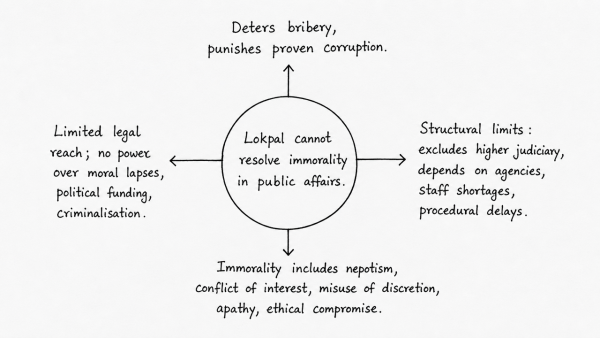
- Limited legal reach: The Lokpal acts on written complaints and offences under anti-corruption law; it has no broad power over moral lapses, political funding, or criminalisation of politics.
- Structural limits: It excludes the higher judiciary, depends on agencies like the CBI, and faces staff shortages and procedural delays.
- Weak moral prevention: It cannot create honesty, public service values, or a culture of transparency by itself.
- Need for wider reforms: Ethical training, whistleblower protection, code of ethics, simpler rules, digital governance and transparent party finance are essential.
Thus, Lokpal is necessary as an anti-corruption watchdog, but immorality in public affairs needs institutional reform, political accountability and civic ethics together.
Originally written on
August 28, 2026
and last modified on
September 7, 2026.