Maharashtra Bans Sale of Loose Edible Oil
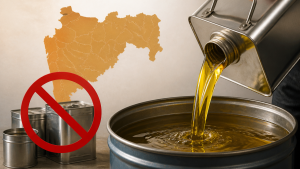
Maharashtra’s Food and Drug Administration issued a statewide order on 20 August 2026 banning the sale of loose or unpackaged edible oil and fats. The order applies across the edible oil supply chain, including oil expellers, refiners, blenders, repackers, importers, wholesalers, transporters, retailers, and e-commerce platforms.
Edible Oil Regulation in India
Edible oil in India is regulated under the Food Safety and Standards Act, 2006, and related food safety rules. Packaged edible oil must carry labels with product identity, source details, batch information, and expiry date. Food safety authorities can act against unsafe, substandard, and misbranded food products under the Act.
Packaging and Labelling Requirements
The Maharashtra directive requires edible oil to be sold only in sealed and tamper-evident packages. It also mandates complete labelling on every pack. Multi-sourced vegetable oil packs are restricted to a maximum size of 15 kg under the order.
- Loose edible oil refers to oil sold without a sealed retail pack or standard label.
- Tamper-evident packaging is designed to show whether a pack has been opened or altered.
- Labelling rules for food products in India are linked to consumer safety and traceability.
Used Cooking Oil and Total Polar Compounds
The order prohibits repeated reuse of frying oil in commercial establishments. Used cooking oil with Total Polar Compounds above 25% must be disposed of through authorised collectors. Total Polar Compounds are a chemical measure used to assess the degradation of frying oil during repeated heating.
Penalties Under Food Safety Law
The FDA stated that violations can attract prosecution under the Food Safety and Standards Act, 2006. The penalties include imprisonment of up to seven years for serious offences. The order also lists fines of up to ₹10 lakh for unsafe food or misleading advertisements, up to ₹5 lakh for substandard oil, and up to ₹3 lakh for misbranded oil.
Important Facts for Exams
- Argemone oil contamination is linked to epidemic dropsy, a food poisoning condition recorded in India.
- Reused rusted tin cans can cause toxic lead leaching into edible oil.
- The Maharashtra FDA analysed 1,247 edible oil samples over the past year.
- The sample analysis found 77 substandard, 13 unsafe, and 15 misbranded samples.
Food Safety Enforcement in Maharashtra
The Maharashtra Food and Drug Administration is the state authority responsible for food safety enforcement in the state. The 14-point compliance order covers unlicensed operations, unauthorised blending, and sale through retail and online channels.
| Related | |
|---|---|