Karnataka Reserves Reservoir Water for Drinking Needs
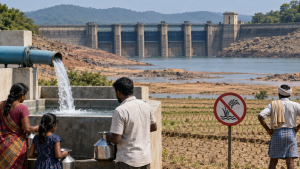
Amid low reservoir inflows across Karnataka in July 2026, water authorities restricted irrigation use and prioritised drinking water. Directions varied by reservoir and district.
Reservoir and basin-level restrictions
In early July, authorities for the Bhadra reservoir reserved available water for drinking and ruled out releases for monsoon crops. The Tungabhadra Project and Vijayanagara Canal Irrigation Advisory Committee also said water from the Tungabhadra dam would not be released for monsoon crops. On 11 July, Water Resources Minister Ramalinga Reddy said water in Cauvery basin dams, including the KRS dam, would be used exclusively for drinking. In late July, farmers were advised against cultivating crops dependent on water from the Harangi reservoir, following earlier directives dated 26 February and 5 June, and from the Kabini dam because of low inflows.
District-level directions
In Chitradurga, the District Collector warned farmers against water-intensive crops such as paddy and sugarcane using Vani Vilasa Sagar reservoir water, which was reserved for drinking. In Haveri, an order issued on 30 July stated that water released into the Tunga Upper Canal could be used only to fill tanks and meet the drinking needs of people and livestock; irrigation use was prohibited.
Important Facts for Exams
- Seasonal inflow: At the Bhadra Dam catchment, 82% of inflow comes during the southwest monsoon and 18% during the northeastern monsoon.
- Surki mortar: The Tungabhadra Dam uses surki mortar, a construction material made from mud and limestone rather than cement.
| Related | |
|---|---|