Kanha Records 51 Barasingha Births as Population Nears 1,100
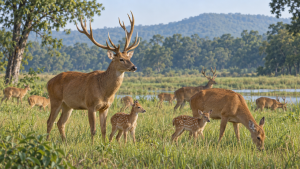
Kanha National Park in Madhya Pradesh reported 51 barasingha births between July and mid-October 2026. Its barasingha population was approximately 1,100 in April 2026, and forest staff were monitoring the young animals.
Barasingha Translocations to Bandhavgarh
Kanha’s barasingha were translocated to Bandhavgarh Tiger Reserve in March and May 2023 and again in March 2024. By February 2026, 48 animals had been moved there. Bandhavgarh’s population had risen to 64 by May 2026, indicating successful adaptation and breeding.
Important Facts for Exams
- Antler structure: Barasingha antlers carry more than three tines, a feature that distinguishes the species from other Indian deer.
- Hard-ground subspecies: The southern, hard-ground swamp deer has hard hooves and is adapted to open sal forest with a grass understorey.
- Breeding biology: Barasingha breeding lasts from September to April; gestation is 240–250 days, and females give birth to single calves.
- Legal protection: The barasingha is listed in CITES Appendix I and Schedule I of India’s Wildlife Protection Act, 1972.
Category: Madhya Pradesh
Originally written on
October 15, 2026
and last modified on
November 20, 2026.
| Related | |
|---|---|