Kakdwip Begins Final Phase of Pond-Based Hilsa Research
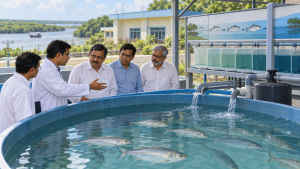
On 27 June 2026, the Kakdwip Fisheries Research Center in Kakdwip, South 24 Parganas, West Bengal, began the final phase of its pond-based hilsa research. Sundarban Development Minister Dipankar Jana inaugurated a new salinity-gradient recirculating aquaculture system to support the work.
System to simulate migration-related salinity changes
The system is designed to simulate salinity changes associated with hilsa migration. Researchers expect it to assist efforts to achieve artificial breeding of hilsa. The project cost approximately ₹60 lakh.
Earlier pond trials and research team
Previous trials at the centre maintained hilsa survival and growth in ponds; the maximum reported weight in pond-based farming was 982 grams. Dr Kuldeep K. Lal, Director of the Central Institute of Brackishwater Aquaculture (CIBA), and Dr Debasish De, Chief Scientist of the Kakdwip Research Center, attended the inauguration.
Important Facts for Exams
- Spawning migration: Hilsa is anadromous: it ascends rivers from coastal waters for roughly 50–100 km to spawn.
- Captive life cycle: Despite cultivation efforts across South Asia since the 1900s, hilsa’s complete life cycle has not been achieved in captivity.
| Related | |
|---|---|