India Launches Clouded Leopard Conservation Action Plan
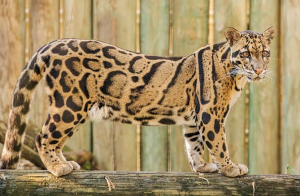
India launched a new Clouded Leopard Conservation Action Plan on International Clouded Leopard Day, observed on 4 August 2026. The plan was prepared under the Government of India-GEF-UNDP initiative and was released during the 91st meeting of the Standing Committee of the National Board of Wildlife in Coimbatore.
Clouded Leopard: Species Profile
The clouded leopard is a wild cat species found mainly in forested habitats of Northeast India and parts of South and South-East Asia. It is listed as Vulnerable on the IUCN Red List and is protected under Schedule I of the Wildlife Protection Act, 1972.
Key Features of the Conservation Action Plan
The Conservation Action Plan provides a framework for habitat security, forest connectivity, scientific monitoring, and community participation. It identifies 14 priority conservation landscapes across Northeast India for landscape-level habitat restoration and corridor conservation between forest patches. The plan includes standardised monitoring methods such as camera traps, occupancy surveys, genetic analysis, and environmental DNA studies. It also covers anti-poaching measures, wildlife crime prevention, and training for frontline forest staff through the M-STrIPES smart application.
Institutional and Programme Framework
The clouded leopard has been included under the Species Recovery Programme of the Integrated Development of Wildlife Habitats scheme. The Wildlife Institute of India prepared the technical report for the Conservation Action Plan for the Caracal, Fishing Cat, and Clouded Leopard.
Important Facts for Exams
- The clouded leopard is listed as Vulnerable on the IUCN Red List.
- It is included in Schedule I of the Wildlife Protection Act, 1972.
- The Integrated Development of Wildlife Habitats scheme contains a Species Recovery Programme.
- M-STrIPES is a smart monitoring application used by forest staff in wildlife management.
Exam-Relevant Static Facts
Camera traps, occupancy surveys, genetic analysis, and environmental DNA are standard tools used in wildlife population studies. Northeast India contains several forest corridors that are important for the movement of large carnivores and other forest-dependent species.
| Related | |
|---|---|