India Inaugurates Nuclear-Heat Hydrogen Facility
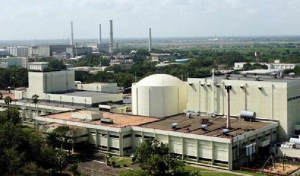
India inaugurated the world’s first hydrogen production facility using nuclear process heat on 26 June 2026 at the Indira Gandhi Centre for Atomic Research in Kalpakkam, Tamil Nadu. The facility uses the Copper-Chlorine thermochemical cycle and receives nuclear process heat from the Fast Breeder Test Reactor.
Hydrogen Production by Nuclear Heat
Hydrogen can be produced by thermochemical water-splitting processes that use heat instead of direct electricity for part of the reaction chain. The Copper-Chlorine cycle is one such process and belongs to the class of high-temperature thermochemical hydrogen production methods.
Indira Gandhi Centre for Atomic Research
The Indira Gandhi Centre for Atomic Research, or IGCAR, is a premier nuclear research centre under the Department of Atomic Energy in Kalpakkam, Tamil Nadu. It is associated with advanced reactor research, fuel cycle studies, and fast reactor technology in India.
Fast Breeder Test Reactor and Cu-Cl Cycle
The Fast Breeder Test Reactor, or FBTR, is located at IGCAR and provides the nuclear process heat used in the facility. The Copper-Chlorine thermochemical cycle was developed indigenously by the Bhabha Atomic Research Centre in Mumbai and is designed for hydrogen generation through a closed chemical loop.
Important Facts for Exams
- Hydrogen is the lightest element and has the atomic number 1.
- Thermochemical hydrogen production uses heat-driven chemical reactions and can be linked with nuclear reactors.
- The Department of Atomic Energy is the nodal body for India’s civilian nuclear programme.
- The Fast Breeder Test Reactor is a sodium-cooled fast reactor located at Kalpakkam.
Technology Demonstrator
The facility functions as a technology demonstrator for validating the Copper-Chlorine process for future large-scale hydrogen production. The project is linked with advanced nuclear reactors and carbon-free hydrogen production pathways.
| Related | |
|---|---|