India Begins First Soil Carbon Payments for Farmers
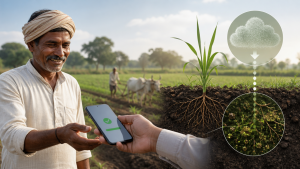
India initiated its first direct benefit transfer payments for soil carbon credits on 16-17 September 2026 to more than 2,500 smallholder farmers in Punjab and Haryana. The payments totalled over ₹2.9 crore and were linked to verified carbon credits generated through regenerative farming practices under the Aadi farmer carbon programme.
Soil Carbon Credits
Soil carbon credits are carbon units generated when farming practices increase soil organic carbon or reduce greenhouse gas emissions from agriculture. The Aadi programme issued agricultural carbon credits under the Verra VM0042 methodology, which is a carbon accounting framework used for land-management projects.
Regenerative Farming Practices
Participating farmers used Direct Seeded Rice, reduced tillage, and crop-residue management between 2019 and 2022. These practices are associated with lower methane emissions from paddy cultivation, reduced soil disturbance, and retention of crop residues on fields.
Programme Features and Coverage
The Aadi programme was launched in 2019 by Grow Indigo with technical guidance from the Indian Council of Agricultural Research. It covers more than two million acres and more than 100,000 farmers across seven states, making it one of the largest agricultural carbon-credit initiatives in India.
Important Facts for Exams
- Direct Seeded Rice is a paddy cultivation method in which rice seeds are sown directly in the field without nursery transplantation.
- Reduced tillage is a conservation agriculture practice that limits soil disturbance during land preparation.
- Punjab Agricultural University is located in Ludhiana, Punjab, and is a major agricultural research institution in India.
- ICAR stands for the Indian Council of Agricultural Research, which functions under the Department of Agricultural Research and Education.
Payment Structure and Environmental Outcomes
Individual farmers received about ₹3,000 to ₹15,000, depending on the verified carbon credits generated from their fields. The programme also recorded water savings of an estimated 45 billion litres during 2019-22 and avoided more than 2 lakh tonnes of crop-residue burning during the same period.
Carbon Market Context
Verra is a global standards body for voluntary carbon markets, and VM0042 is one of its methodologies for improved agricultural land management. Agricultural carbon-credit projects use field-level verification, measurement, reporting, and third-party validation before credit issuance.
| Related | |
|---|---|