Sea Urchin
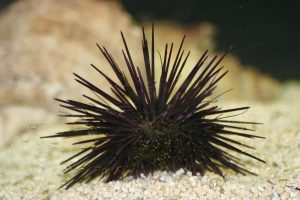
Sea urchins are marine invertebrates belonging to the class Echinoidea, one of the main groups within the phylum Echinodermata. Around 950 living species inhabit seabeds across all oceans, from shallow intertidal zones to the deepest hadal regions. They possess distinctive globular bodies encased in a hard calcareous test from which moveable spines protrude. Sea urchins play a significant role in marine ecosystems through grazing, bioturbation and serving as prey for a range of predators including starfish, sea otters, triggerfish and sharks. Their evolutionary history is long, with a fossil record extending back to the Ordovician period over 450 million years ago.
Diversity and classification
Sea urchins fall within the subphylum Echinozoa, which also includes sea cucumbers. Their fivefold or pentameric symmetry is characteristic of echinoderms, although it may be concealed in living specimens but becomes obvious in the dried test. The term “sea urchin” generally refers to regular echinoids, which are radially symmetrical and globular in outline.
Two principal subclasses exist:
- Perischoechinoidea, which includes the order Cidaroida (slate-pencil or pencil urchins). These possess thick, blunt primary spines and often host algae and sponges on their surfaces.
- Euechinoidea, the more diverse subclass comprising both regular and irregular urchins.
Within Euechinoidea, major superorders and orders include:
- Atelostomata, containing Cassiduloida and Spatangoida (the heart urchins).
- Diadematacea, which includes Diadematoida, Echinothurioida and Pedinoida.
- Echinacea, containing Arbacioida, Echinoida, Phymosomatoida, Salenioida and Temnopleuroida.
- Gnathostomata, including Clypeasteroida (sand dollars) and Holectypoida.
Irregular urchins, grouped under the infraclass Irregularia, comprise flattened or bilaterally influenced forms such as sand dollars and Echinocardium. They have evolved specialised shapes suited to burrowing through sand and soft sediments. Sea cucumbers share this subphylum due to their globoid bodies lacking arms, although their feeding tentacles evolved from tube feet rather than homologous skeletal projections.
Morphology and body structure
Sea urchins vary widely in size, typically from a few centimetres to much larger forms. Their body is enclosed by a rigid test, an endoskeletal structure composed of fused calcium carbonate plates organised into ten longitudinal columns: five ambulacral areas with pores for tube feet and five interambulacral areas without pores. These plates are capped with tubercles that anchor the spines.
Spines may be long, short, hollow or solid depending on the species, and are capable of intricate movement thanks to a muscular sheath and a specialised collagen layer that can stiffen or relax. In addition, sea urchins possess pedicellariae, small jawed appendages used for cleaning, defence and capturing tiny prey.
The internal architecture is lined with peritoneum, and the test grows with the animal without requiring moulting. Sea urchins use dissolved carbon dioxide and a nickel-based catalytic process to produce the calcium carbonate needed for skeletal development.
Locomotion and behaviour
Movement is achieved primarily through hundreds of tube feet, extended hydraulically by the animal’s water vascular system. Tube feet adhere to surfaces with suction and release through chemical bonding rather than suction alone. Spines assist locomotion by pushing the body or enabling the animal to lift itself. Many species can right themselves when overturned by coordinated tube-foot and spine action.
Certain species burrow into soft substrate using their spines, while others such as Paracentrotus lividus may excavate soft rock using their powerful jaws.
Feeding and digestive system
Sea urchins are predominantly herbivorous, feeding on algae, though they will consume sessile or slow-moving animals such as sponges and crinoids. The mouth is located on the oral (lower) surface in regular urchins and contains a specialised jaw apparatus known as Aristotle’s lantern. This complex structure comprises five pyramidal plates, each with a sharp tooth used for scraping and chewing. Surrounding the mouth is the peristome containing modified tube feet and, in many species, gills.
On the aboral (upper) surface lies the periproct, a membrane surrounding the anus. It includes the genital plates hosting the gonopores and a madreporite that regulates the water vascular system.
The efficiency and durability of Aristotle’s lantern have inspired mechanical engineering research, particularly in grinding and cutting applications.
Life cycle and development
Sea urchins have long served as model organisms in developmental biology, particularly since the nineteenth century. Their embryos are transparent and easy to culture, making them ideal for observing early developmental stages. Larvae exhibit bilateral symmetry, highlighting the echinoderm position within the Bilateria, a group that includes chordates and many other animal phyla. As they metamorphose, the characteristic pentameric adult symmetry emerges.
Reproduction typically involves external fertilisation, with gametes released into the water column. Larval dispersal contributes to wide geographic distribution.
Ecology and distribution
Sea urchins inhabit nearly every marine environment, from tropical coral reefs to polar seas. They play crucial roles in controlling algal growth and shaping benthic community structure. Overpopulation of some species, often due to predator decline, can lead to destructive grazing and the formation of “urchin barrens” where algal forests are depleted.
They are also subject to predation from a wide range of animals including sea otters, triggerfish, and wolf eels. Fossil urchins have historical significance as amulets, and living species such as Eucidaris tribuloides are common in aquaria where they help manage algae.
| Related | |
|---|---|