Great Barrier Reef coral cover rebounds to 35.1%
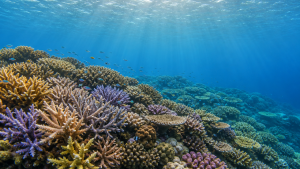
The Australian Institute of Marine Science released the 2025/26 Long-Term Monitoring Program Annual Summary Report on 11 August 2026. The report recorded a rebound in hard coral cover in parts of the Great Barrier Reef after severe bleaching in earlier years.
Great Barrier Reef and Coral Cover
The Great Barrier Reef is the world’s largest coral reef system and lies off the north-eastern coast of Australia in the Coral Sea. Hard coral cover is a standard monitoring measure used to assess the proportion of reef surface occupied by living hard corals.
In the Northern region, hard coral cover rose to 35.1% in the field season ending June 2026, compared with a record low of 30% in 2025. In the Central region, hard coral cover increased from 28.6% in 2025 to 31.6% in 2026, while the Southern region declined from 26.9% to 26.4%.
Long-Term Monitoring Program
The Long-Term Monitoring Program is AIMS’s long-running reef survey programme for tracking coral cover, coral mortality, and reef condition across the Great Barrier Reef. The 2025/26 survey covered 121 reefs, with coral cover unchanged on 56% of reefs, increased on 28%, and declined on 16%.
AIMS uses repeated field surveys to compare regional and long-term changes in reef health. The programme provides data for the Northern, Central, and Southern sectors of the Great Barrier Reef.
Bleaching, Monsoon and Reef Stressors
AIMS LTMP leader Dr. Mike Emslie stated that a late-summer monsoon in early 2026 brought cloud cover and cooler sea surface temperatures. Cooler water temperatures can reduce heat stress on corals during bleaching events.
Marine scientists also noted pressure from climate-induced disruptions, cyclones, and a fifth wave of coral-eating crown-of-thorns starfish outbreaks. Crown-of-thorns starfish are a coral predator species that can rapidly reduce live coral cover on affected reefs.
Important Facts for Exams
- The Great Barrier Reef is a UNESCO World Heritage Site and is located off Queensland, Australia.
- Hard coral cover is measured as a percentage of reef area occupied by living hard corals.
- Coral bleaching occurs when corals expel symbiotic algae called zooxanthellae under heat stress.
- The Australian Institute of Marine Science is a statutory research body in Australia that studies marine ecosystems.
UNESCO and Conservation Status
In July 2026, the UNESCO World Heritage Committee decided not to place the Great Barrier Reef on the List of World Heritage in Danger. The committee’s decision came one month before the release of the AIMS 2025/26 monitoring summary.
| Related | |
|---|---|