Government to Allow Trading of Major Minerals on Exchange
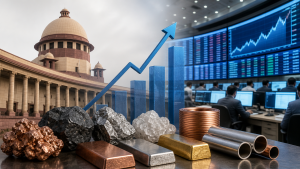
The Government of India has announced a regulated electronic exchange for trading major minerals from the next financial year. The first phase will cover iron ore, limestone, manganese, and bauxite, and the Indian Bureau of Mines will supervise platform registration and ecosystem audits under the Mineral Exchange Rules, 2026.
Major Minerals in India
Major minerals are minerals regulated at the national level under the Mines and Minerals (Development and Regulation) framework. Coal, limestone, iron ore, copper, manganese, and bauxite are among the minerals placed under central regulatory control in the current reform package.
Mineral Exchange Rules, 2026
The Ministry of Mines published the Mineral Exchange Rules, 2026 on 30 June 2026. The rules designate the Indian Bureau of Mines as the primary supervisor for registering exchange platforms and auditing the trading ecosystem.
The draft Mineral Exchange (Regulation) Rules, 2026 were issued on 19 March 2026 for a 30-day public consultation. The draft proposed measures against insider trading, circular trading, and cartelisation in mineral markets.
Legislative Framework for Mineral Trading
On 13 August 2026, Parliament passed the Mines and Minerals (Development and Regulation) Amendment Bill, 2026. The Bill created a uniform national fiscal framework by limiting the power of state governments to impose additional taxes or levies on mineral rights.
Union Coal and Mines Minister G. Kishan Reddy stated that the Central Government will regulate major minerals, while state governments will continue to oversee 49 minor minerals. This division follows the classification used in India’s mineral administration system.
Important Facts for Exams
- The Mines and Minerals (Development and Regulation) Act, 1957 is the principal law governing mineral development in India.
- The Indian Bureau of Mines is a statutory body under the Ministry of Mines.
- Minor minerals in India include building stones, ordinary clay, and ordinary sand used for stowing.
- Electronic exchanges are used in commodity markets for price discovery and standardised trading.
The first phase of exchange trading will begin with selected major minerals and may expand after regulatory testing. The reform package includes third-party quality verification for mineral lots traded on the platform.
| Related | |
|---|---|