Google Announces Project Suncatcher for Space AI Computing
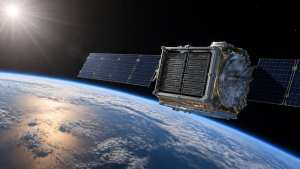
Project Suncatcher is a Google research initiative announced in November 2025 to test artificial intelligence computing infrastructure in space. The first prototype satellite, named MVP, is scheduled for launch on 1 October 2026 into low-Earth orbit aboard the SpaceX Transporter-18 mission from Vandenberg Space Force Base.
Project Suncatcher and AI Hardware
Project Suncatcher focuses on Google Tensor Processing Units, or TPUs, which are application-specific integrated circuits used for machine learning workloads. The MVP satellite contains four Google TPU chips and has computing power roughly equivalent to a single data centre server. The satellite was built in partnership with Planet Labs, a San Francisco-based space company.
Space Environment and Power Supply
The year-long mission is designed to test TPU performance under launch vibrations, radiation, and vacuum heat. Solar panels on the satellite will supply about one kilowatt of power for hardware testing. Satellites in low-Earth orbit can receive up to eight times more solar power than similar systems on Earth because they spend long periods in sunlight.
Future Mission Plan and Technical Tests
Google plans two more satellites for 2027 to test high-bandwidth laser links between spacecraft. These links are intended for connecting satellite clusters for larger AI workloads. Initial laboratory tests on Trillium TPUs found that the chips withstood radiation exposure beyond typical five-year space mission levels, while memory remained the weakest component.
Important Facts for Exams
- Low-Earth orbit is the region of space that lies above Earth and below medium Earth orbit, and it is used for many satellites and crewed missions.
- Tensor Processing Units are specialised processors developed by Google for machine learning and neural network tasks.
- SpaceX Transporter missions are rideshare launches that carry multiple small satellites on a single rocket.
- Laser communication links in space are used for high-bandwidth data transfer between satellites.
Related Static Facts
Vandenberg Space Force Base is a United States military launch site in California used for polar and sun-synchronous orbit missions. Planet Labs operates Earth-imaging satellites and has worked on small-satellite systems for commercial space applications.
| Related | |
|---|---|