DoT Enforces Nine-SIM Limit Using Subscriber Photographs
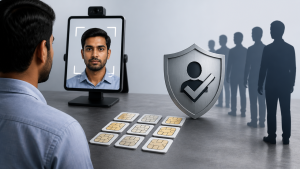
The Department of Telecommunications (DoT) issued a circular on 17 August 2026 directing telecom service providers to deny new mobile connections to subscribers who have already reached the prescribed SIM card limit. Under the rules in force on that date, an individual in India can hold a maximum of nine mobile connections across operators, while Jammu and Kashmir, Assam, and the North Eastern States have a lower limit of six connections.
SIM Card Limit in India
The SIM card limit is a regulatory cap on the number of mobile connections that one person can hold. The DoT applies the limit through subscriber identity checks and telecom verification systems under the Indian telecom regulatory framework.
- An individual can hold up to nine mobile connections in most parts of India.
- The limit is six mobile connections in Jammu and Kashmir, Assam, and the North Eastern States.
- The restriction applies across all telecom operators and not to a single service provider.
Digital Intelligence Platform and Photograph-Based Screening
On 23 August 2026, the DoT will make a representative image of the photograph of each subscriber who has reached the maximum SIM limit available to telecom service providers through the Digital Intelligence Platform (DIP). From 24 August 2026, operators must download these representative photographs daily and use technical systems to identify applications that exceed the permitted limit.
Telecom operators will initially use a post-facto, next-day verification process from 24 August 2026. Any excess SIM card activated for even one day must be suspended immediately under the DoT directions.
Real-Time Verification and Cybercrime Control
By 30 November 2026, telecom operators must shift from post-facto verification to a real-time photographic check during subscriber enrolment and activation. The system uses subscriber photographs as a screening tool in the initial connection process.
The measure is linked to the prevention of cybercrime and financial fraud, including digital arrest scams, which use mobile numbers and impersonation methods for deception.
Important Facts for Exams
- The Department of Telecommunications functions under the Ministry of Communications.
- The Digital Intelligence Platform is used for telecom-related fraud detection and verification.
- India’s mobile subscriber verification system uses identity documents and biometric-linked processes in many cases.
- “Digital arrest” scams involve fraudulent calls or messages that create false claims of police or agency action.
Legal and Administrative Context
The photograph-based verification rule became binding within weeks of the government informing the Supreme Court of India that the database verification mechanism was still under study. The DoT circular of 17 August 2026 sets the compliance timeline for telecom service providers and subscriber screening systems.
| Related | |
|---|---|