CCRAS and BIS Sign MoU on Ayurveda Standards
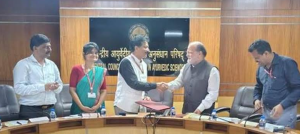
The Central Council for Research in Ayurvedic Sciences (CCRAS) and the Bureau of Indian Standards (BIS) signed a Memorandum of Understanding (MoU) in New Delhi on 7 August 2026. The agreement covers quality standards, conformity assessment, and scientific research for the Ayush sector, which includes Ayurveda, Yoga and Naturopathy, Unani, Siddha, Sowa-Rigpa, and Homoeopathy.
CCRAS and BIS
CCRAS is the apex research organisation for Ayurvedic sciences under the Ministry of Ayush. BIS is India’s national standards body under the Ministry of Consumer Affairs, Food and Public Distribution, and it frames Indian Standards for products, processes, and services.
Quality Standards in Ayurveda
The MoU seeks to develop globally benchmarked quality standards for Ayurvedic products and research. The agreement also covers safer products, scientific validation, and internationally accepted testing and certification practices.
Conformity Assessment and Laboratory Systems
Conformity assessment includes testing, inspection, certification, and related procedures used to verify compliance with standards. The collaboration will strengthen laboratory quality and use CCRAS institutions and laboratories, many of which have National Accreditation Board for Testing and Calibration Laboratories (NABL) and ISO accreditation.
Important Facts for Exams
- The BIS Ayurveda Sectional Committee manages 128 Indian Standards for the traditional medicine sector.
- The MoU was signed by Prof. (Vaidya) Rabinarayan Acharya and Shri Sanjay Pant.
- Vaidya Rajesh Kotecha is the Secretary of the Ministry of Ayush.
- BIS is India’s national standards body and issues Indian Standards across multiple sectors.
International Standardisation
The joint initiative is linked with India’s participation in international standardisation bodies in evidence-based traditional medicine. Ayurveda is one of the major systems under the Ayush framework and has a long textual tradition in India.
| Related | |
|---|---|