
Bahaism
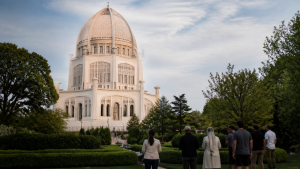
The Bahá’í Faith is a monotheistic religion that began in 19th-century Persia and teaches the unity of God, religion, and humanity. Its followers, called Bahá’ís, believe in progressive revelation and the equality of all people.
Origins and Historical Evolution
The Bahá’í Faith grew out of Bábism, a movement that emerged from Shia Islam in Persia during the 1840s.
The Báb (1819–1850)
- Siyyid `Alí-Muhammad of Shiraz took the title “The Báb,” meaning “The Gate” in Arabic.
- 1844: He declared his mission and announced the imminent arrival of a universal messenger from God.
- Opposition: His teachings faced strong resistance from the Persian government and Islamic clergy.
- Execution: He was executed for heresy in Tabriz in 1850.
Bahá’u’lláh (1817–1892)
- Born as Mírzá Husayn-`Alí Nuri, he was an early follower of the Báb.
- 1863: While exiled in Baghdad, he declared himself the promised educator foretold by the Báb.
- Title: “Bahá’u’lláh” means “The Glory of God.”
- Exile: He spent the rest of his life in exile and imprisonment in Ottoman territories.
- Death: He died in Acre, near Haifa in modern-day Israel, now the spiritual and administrative heart of the religion.
`Abdu’l-Bahá (1844–1921)
- Relationship: He was the eldest son of Bahá’u’lláh.
- Role: Bahá’u’lláh appointed him as the sole authorized interpreter of the scriptures and leader of the community.
- Travels: He visited Europe and North America to establish early Bahá’í communities.
Shoghi Effendi (1897–1957)
- Relationship: He was the grandson of `Abdu’l-Bahá.
- Title: He was designated as the “Guardian of the Cause.”
- Contribution: He translated many sacred texts into English and built the global administrative structure.
Core Principles and Beliefs
The theological foundation of the Bahá’í Faith rests on three core pillars.
| Principle | Description |
| Oneness of God | Believes in a single, all-powerful, and unknowable God who created the universe. |
| Oneness of Religion | States that all major world religions come from the same divine source and form part of a progressive spiritual dispensation. |
| Oneness of Humanity | Asserts that all humans are equal, regardless of race, nation, gender, or social class. |
Key Social Teachings
- Equality of Genders: The equality of men and women is a prerequisite for world peace.
- Harmony of Science and Religion: True science and true religion must agree; scientific truths do not contradict spiritual truths.
- Universal Education: Compulsory basic education is a primary duty of society.
- Elimination of Extremes of Wealth: Society must adopt economic measures to reduce the gap between the rich and the poor.
- An International Auxiliary Language: A global auxiliary language should be adopted to ease cross-border communication.
Sacred Scriptures and Texts
The Bahá’í Faith has a large body of scriptures, which Bahá’ís regard as divinely inspired.
- Kitáb-i-Aqdas (The Most Holy Book): Written by Bahá’u’lláh in Arabic around 1873; it is the primary book of laws and establishes the institutions of the faith.
- Kitáb-i-Íqán (The Book of Certitude): Written by Bahá’u’lláh to explain progressive spiritual dispensation and interpret Judeo-Christian and Islamic scriptures.
- The Hidden Words: A compilation of brief, poetic, ethical passages written by Bahá’u’lláh during his exile.
- The Seven Valleys: A mystical treatise written in response to Sufi scholars, describing the stages of the soul’s journey toward God.
Administrative Order and Governance
The Bahá’í Faith has no clergy. Its administrative system combines democratic election with moral authority.
Local and National Spiritual Assemblies
- Composition: Nine-member councils elected annually by secret ballot.
- Function: They operate at local and national levels to manage community affairs.
- Election method: Elections are held without nominations, campaigning, or candidacies.
The Universal House of Justice
- Established: 1963.
- Status: The supreme international governing body of the Bahá’í Faith.
- Composition: Nine members elected every five years by the members of all National Spiritual Assemblies.
- Seat: Mount Carmel in Haifa, Israel.
Calendar and Daily Practices
- The Badí‘ Calendar: A solar calendar with 19 months of 19 days each, totaling 361 days; four or five intercalary days (Ayyám-i-Há) are added to complete the solar year.
- The Nineteen-Day Fast: Believers aged 15 to 70 fast from sunrise to sunset during the 19th month, which falls in March.
- Daily Prayer: Devout Bahá’ís perform one of three obligatory prayers daily, facing the Qiblih, the Shrine of Bahá’u’lláh in Israel.
- Prohibitions: The faith prohibits alcohol, non-medicinal drugs, gambling, and gossip.
Bahá’í Houses of Worship
A Bahá’í House of Worship is called a Mashriqu’l-Adhkár, meaning “The Dawning-place of the Remembrance of God”.
- Open to All: These temples are open to people of all backgrounds and faiths.
- Architectural Design: Every House of Worship has nine sides and a central dome; they contain no pulpits, pictures, statues, or religious icons.
- No Rituals: There are no sermons or rituals; services consist of readings from scriptures of various world religions.
The Bahá’í Faith in India
India occupies an important place in the history and geography of the Bahá’í Faith.
Early Spread and Pioneers
- Arrival: During Bahá’u’lláh’s lifetime, the faith reached India.
- 1874-1875: Bahá’u’lláh sent Jamal Effendi, a Persian teacher, to spread the teachings across the Indian subcontinent.
- Early converts: The first converts were members of the Parsi community in Bombay, now Mumbai.
- First Sikh convert: Pritam Singh became the first Sikh to join the Bahá’í Faith in the early 20th century.
Modern Demographics
- Largest national community: India hosts the largest national community of Bahá’ís in the world.
- Population estimate: Government census figures are low due to classification practices, but demographic studies estimate more than one million Bahá’ís in India.
The Lotus Temple
The most famous Bahá’í structure in India is the Lotus Temple in New Delhi.
- Location: Bahapur, New Delhi.
- Inauguration: Completed and dedicated in December 1986.
- Architect: Fariborz Sahba, an Iranian-Canadian architect.
- Structure: The building is shaped like a partially open lotus with 27 free-standing marble petals arranged in clusters of three to form nine sides.
- Construction: The structural design was executed by Flint & Neill, and construction was carried out by Larsen & Toubro.
- Symbolism: The lotus symbolizes purity and spiritual unity across Indian religious traditions, including Hinduism and Buddhism.
Rare Facts for Prelims
- Bahá’í calendar: Its month names are derived from divine attributes, such as Glory, Beauty, and Grandeur.
- Intercalary days: Ayyám-i-Há are placed before the final month of the Bahá’í year, not at the end of the calendar year as in many other systems.
- No clergy: The Bahá’í Faith is one of the few world religions that functions without priests or ordained clergy.
- Election rule: Bahá’í elections are conducted by secret ballot without nominations or electioneering.
- Haifa and Acre: These two sites in present-day Israel are among the most important Bahá’í pilgrimage locations.
- Universal House of Justice: Its members are elected by representatives rather than by direct popular vote.
