Andhra Pradesh Cabinet Approves PPP Policy and Ease of Doing Business Act
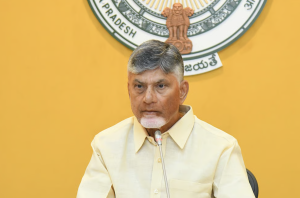
The Andhra Pradesh Cabinet, chaired by Chief Minister N. Chandrababu Naidu in Amaravati on 6 August 2026, approved the draft Andhra Pradesh Public-Private Partnership (PPP) Policy-2026 and the draft Andhra Pradesh Omnibus (Ease of Doing Business) Act, 2026. The Cabinet also cleared measures on pedestrian safety, quantum infrastructure, aquaculture subsidy, and the withdrawal of the Andhra Pradesh Disha Bill, 2019.
Public-Private Partnership Policy
The Andhra Pradesh Public-Private Partnership (PPP) Policy-2026 is a state policy framework for private participation in transport, ports, healthcare, education, and renewable energy. PPP models are used in infrastructure projects where public authorities and private entities share responsibilities, risks, and returns.
The state earmarked ₹1,500 crore under the Viability Gap Funding (VGF) scheme for PPP projects. A Bridge Fund was also proposed for projects that are not financially viable at the initial stage but have long-term revenue potential.
Ease of Doing Business Framework
The Andhra Pradesh Omnibus (Ease of Doing Business) Act, 2026 is designed to simplify regulations and remove procedural hurdles in industrial approvals. Ease of Doing Business reforms generally cover licensing, clearances, compliance reduction, and time-bound permissions for enterprises.
Omnibus legislation is a single law that consolidates multiple provisions into one framework. Such laws are used by states to reduce overlap among departments and to standardise administrative procedures.
Other Cabinet Decisions
The Cabinet approved the withdrawal of the Andhra Pradesh Disha Bill, 2019, after alignment with the Bharatiya Nyaya Sanhita (BNS) and the Bharatiya Nagarik Suraksha Sanhita (BNSS), which are part of India’s new central criminal law framework. The state also approved the Andhra Pradesh Pedestrian Safety and Universal Accessibility Policy-2026, which includes road safety audits, CCTV-based encroachment monitoring, and fines of up to ₹1 lakh for administrative infrastructure failures.
The Cabinet sanctioned ₹1,002.49 crore for the Quantum Valley Twin Towers in Amaravati and assigned the construction work to Larsen & Toubro (L&T). It also extended a power tariff subsidy of ₹1.50 per unit for aquaculture farmers from 1 June 2026, with an estimated financial relief of ₹1,150 crore.
Important Facts for Exams
- Viability Gap Funding is a government support mechanism for infrastructure projects that are economically justified but not fully financially viable.
- Public-Private Partnership is a model used in sectors such as ports, roads, healthcare, education, and energy.
- The Bharatiya Nyaya Sanhita and the Bharatiya Nagarik Suraksha Sanhita are part of India’s new criminal law regime.
- Amaravati is the capital region of Andhra Pradesh and the site of the Quantum Valley Twin Towers project.
Legislative Session
The Andhra Pradesh Legislative Assembly monsoon session was fixed for five days from 17 August 2026. Legislative sessions in India are convened by the Governor under constitutional procedure and are used for law-making, budgetary business, and policy discussion.
| Related | |
|---|---|