Network Model
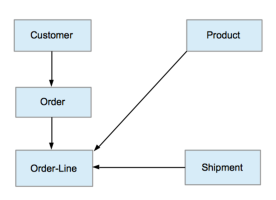
In computing, the network model is a database model designed to represent data objects and their relationships in a flexible and expressive manner. Its defining characteristic is that the database schema is structured as a general graph, in which record types are represented as nodes and relationship types as arcs. Unlike hierarchical models, the network model does not restrict data relationships to a strict tree or lattice structure, allowing records to participate in multiple relationships simultaneously. This flexibility made it a significant development in the early history of database systems.
Concept and Overview
The network model emerged as an extension of the hierarchical database model. While hierarchical databases organise records in a tree structure, with each record having exactly one parent and potentially many children, the network model permits each record to have multiple parent and child records. This results in a generalised graph structure that more accurately reflects complex real-world relationships.
This graph-based organisation operates at two distinct levels. At the schema level, record types are connected by relationship types known as set types, as defined in the CODASYL specification. At the instance level, individual record occurrences are linked through these sets to form the actual database content. Cycles are permitted at both levels, allowing for highly interconnected data structures.
The network model was particularly valued for its ability to model many-to-many relationships directly, without requiring duplication or artificial restructuring of data.
CODASYL and Standardisation
The network model is closely associated with the Conference on Data Systems Languages (CODASYL), specifically its Data Base Task Group. In 1969, CODASYL adopted the network model as a formal database specification, followed by a major revision in 1971. For this reason, the model is often referred to as the CODASYL model.
The CODASYL specifications defined key concepts such as record types, set types, and navigational access methods. Although further refinements continued into the early 1980s, including work that led to an International Organization for Standardization (ISO) specification, these later standards had limited practical impact on commercial database products.
Data Structure and Navigation
In the network model, data access is navigational rather than declarative. Programs traverse the database by explicitly following relationships from one record to another, using predefined paths. This approach provides fine-grained control over performance and data access but requires detailed knowledge of the database structure from the programmer.
Set types define one-to-many relationships between record types, where one record type is designated as the owner and the other as the member. A single record type may participate in multiple sets, either as an owner or a member, enabling complex relationship networks.
This explicit navigation model contrasts sharply with later relational systems, where queries specify what data is required rather than how to retrieve it.
Advantages over the Hierarchical Model
The primary advantage of the network model over the hierarchical model was its greater expressive power. Real-world data often involves complex interconnections that cannot be naturally represented as a strict hierarchy. By allowing multiple parent–child relationships, the network model reduced redundancy and avoided the need for awkward data duplication.
This capability made the model attractive for large-scale applications involving manufacturing data, telecommunications, and administrative systems, where entities frequently participate in multiple relationships.
Limitations and Decline
Despite its strengths, the network model did not become the dominant database paradigm. Two principal factors contributed to this outcome. First, IBM chose to continue investing primarily in the hierarchical model for its flagship products, such as Information Management System (IMS) and Data Language/I (DL/I), incorporating only limited network-style extensions. Given IBM’s market influence, this decision significantly constrained broader adoption.
Second, the emergence of the relational model in the 1970s and its growing commercial adoption in the 1980s ultimately displaced network databases. The relational model offered a higher-level, declarative interface based on mathematical relations, greatly improving programmer productivity and data independence.
Although hierarchical and network databases initially retained a performance advantage due to their low-level access mechanisms, advances in hardware reduced this benefit. Over time, the flexibility and simplicity of relational databases led to the gradual obsolescence of the network model in most enterprise environments.
Historical Development
The original inventor of the network model was Charles W. Bachman, whose work laid the foundation for graph-based database structures. His contributions were formally recognised through the development of the Bachman diagram, a graphical notation used to represent database schemas based on the network model.
In a Bachman diagram, rectangles denote record types, and directed arrows represent one-to-many set relationships. This notation became an important tool for database design and documentation during the height of network database usage.
Bachman’s influence extended beyond the model itself; his work emphasised the role of the programmer as an active navigator of data structures, a concept that shaped early database programming practices.
Implementations and Database Systems
Several commercial database management systems implemented the network model, particularly on mainframe and minicomputer platforms. Notable examples include:
- Integrated Database Management System (IDMS)
- IMAGE for the HP 3000 series
- SIBAS by Norsk Data
- CODASYL DBMS for OpenVMS, originally known as Digital Equipment Corporation’s VAX DBMS
Relationship to Modern Systems
Although the network model is largely obsolete in mainstream enterprise computing, its core ideas remain influential. Modern graph databases, object databases, and certain aspects of object-relational mapping echo concepts first formalised in the network model. Additionally, contemporary distributed systems such as peer-to-peer and client–server architectures reflect network-oriented thinking at the system level, though not in the strict database-model sense.