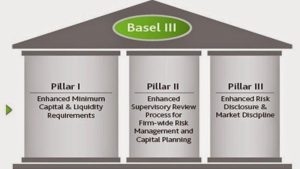
The Basel III Framework is an internationally accepted set of banking regulations developed by the Basel Committee on Banking Supervision (BCBS) to strengthen the regulation, supervision, and risk...
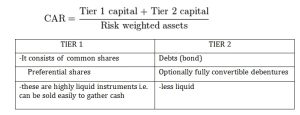
In the realm of banking and financial regulation, Tier I and Tier II Capital represent the two main components of a bank’s regulatory capital, as defined under the...
The Basel Committee on Banking Supervision (BCBS) is an international body that sets global standards for the regulation and supervision of banks. Established in 1974 by the central...
CRAR, short for Capital to Risk-Weighted Assets Ratio, is a key financial metric used to assess the capital adequacy of banks and financial institutions. It measures a bank’s...
Capital adequacy refers to the sufficiency of a bank’s capital in relation to its risk exposures and financial obligations. It is a key measure of a financial institution’s...
The First Narasimham Committee, officially known as the Committee on the Financial System (CFS), was established by the Government of India in August 1991 under the chairmanship of...
The Second Phase of banking in India starts from 1935 when Reserve Bank of India was established. Between the period of 1911-1948, there were more than 1000 banks...
Central Bank of India was dreams come true of Sir Sorabji Pochkhanawala, founder of the Bank. Sir Pherozeshah Mehta was the first Chairman of this Bank. Many more Indian...
The origin of western type commercial Banking in India dates back to the 18th century. The story of banking starts from Bank of Hindustan established in 1770 and it was...
123456789101. Consider the following statements regarding Biosphere Reserves:Biosphere Reserves are referred to as 'living laboratories' due to human intervention in protected areas.In Biosphere Reserves, no activities except for...
123456789101. The minimum number of members required to be present at a sitting of the House or the Committee for valid transaction of its business is called Quorum....