Page-3 of Topic: Political Science
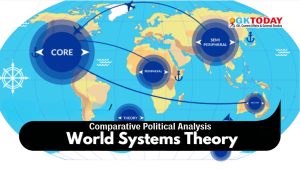
World Systems Theory [UGC-NTA NET Political Science Notes]
World Systems Theory (WST) is a sociological framework that provides vital information about the intricate economic and political relationships shaping the global landscape. Developed by Immanuel Wallerstein in...
Bureaucratic Authoritarianism in Political Science [UGC NTA NET Political Science Notes]
Bureaucratic Authoritarianism (BA) is concept within the study of political regimes, particularly in the context of non-democratic governance. It describes a system where a bureaucratic elite governs with...
Religion in Identity Politics – UGC-NTA NET Political Science
Identity politics plays important role in shaping political landscapes worldwide. In India, religion influences political affiliations, electoral behaviour, and social movements. Definition of Identity Politics Identity politics refers...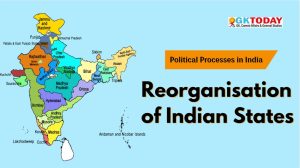
Reorganisation of Indian States – A Political Perspective [UGC-NTA NET Political Science Notes]
The reorganisation of state of India is aspect of the country’s political evolution. It reflects the need to address linguistic, cultural, and administrative disparities that emerged after independence....
Nature of the Indian State – UGC-NTA NET Political Science
The state of India is characterised by its unique constitutional framework, socio-economic policies, and democratic values. It operates as a sovereign, socialist, secular, and democratic republic. Constitutional Framework...
Institutional Mechanisms for Checks and Balances in India
The system of checks and balances is fundamental to the governance structure in India. It ensures that no single entity within the government can exercise unchecked power. This...
UGC-NTA NET Political Science – Sovereignty in International Relations
Sovereignty is a fundamental concept in international relations, referring to the authority of a state to govern itself and its affairs. It embodies the supreme power within a...
Legislative Control over Executive [UGC-NTA NET Political Science]
Legislative control over the executive is a fundamental aspect of governance in India. It ensures that the executive branch remains accountable to the legislature, thereby upholding democratic principles....
Military Dictatorships – An Overview for UGC-NTA NET Political Science
Military dictatorships are a notable form of non-democratic governance where the military exerts control over political authority. Often emerging from a coup d’état, these regimes suspend constitutional law...
Democracy in India [UGC-NTA NET Political Science Notes]
Democracy is a fundamental aspect of India’s political landscape. It is defined as a system of government by the whole population or all eligible members of a state,...
New Institutionalism in Political Science [UGC-NTA NET Political Science Notes]
New Institutionalism is theoretical framework within political science. It focuses on the role of institutions in shaping various aspects of social, political, and economic behaviour. This framework provides...