Page-2 of Topic: liquidity
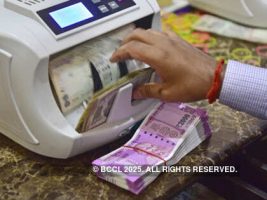
NHB to provide Rs.10,000 cr liquidity infusion facility to HFCs
The housing sector regulator National Housing Bank (NHB) opened a liquidity infusion facility of Rs.10000 crore for Housing Finance Companies (HFCs) to improve liquidity in sector. The move...
RBI liberalises ECB norms by relaxing end-use restrictions
Reserve Bank of India (RBI) has relaxed External Commercial Borrowing (ECB) norms for corporates, non-banking lenders by relaxing end-use restrictions with regard to working capital, general corporate purpose...Strengthening Corporate Bond Market
The corporate bond market in India has failed to take off in spite of measures in successive budgets and at least half a dozen committees mandated by the...
India s GDP Growth Rate Reduces
India s GDP growth rate witnessed a slowdown. This has raised the prospect of fiscal stimulus and a rate cut. GDP Growth Rate India grew at a much...Cash Flow
Cash flow refers to the movement of money into and out of a business, organisation, or individual account over a specific period. It serves as a key indicator...
Abandonment Value
The abandonment value refers to the estimated monetary worth of an asset, project, or investment if it were to be sold, liquidated, or otherwise disposed of before the...What is Bank Rate?
Bank Rate is defined as the rate at which Central Bank gives loans to other domestic banks like commercial banks, cooperative banks, development banks etc. The loans are...
Near Money
Near money, also known as quasi-money, refers to financial assets that are not actual money but can be quickly converted into cash or demand deposits with little or...
Treasury Bills
Treasury Bills, commonly known as T-Bills, are short-term debt instruments issued by the Government of India through the Reserve Bank of India (RBI) to meet short-term funding requirements....
Marginal Standing Facility
The Marginal Standing Facility (MSF) is a monetary policy instrument introduced by the Reserve Bank of India (RBI) in May 2011. It enables scheduled commercial banks to borrow...