Page-8 of Topic: Governance

New Public Administration – Study Notes for UGC-NTA NET Political Science
New Public Administration (NPA) emerged in the late 1960s and early 1970s as shift from traditional public administration. It arose in response to the changing dynamics of governance,...
PM Narendra Modi launches Kisan Suvidha mobile app
Prime Minister Narendra Modi has launched Kisan Suvidha mobile application for farmers to provide agricultural relevant basic information quickly. Kisan Suvidha is an omnibus mobile app that will...
Bureaucratic Authoritarianism in Political Science [UGC NTA NET Political Science Notes]
Bureaucratic Authoritarianism (BA) is concept within the study of political regimes, particularly in the context of non-democratic governance. It describes a system where a bureaucratic elite governs with...
Union Government launches Swachh Paryatan mobile app
Union Government has launched ‘Swachh Parayatan’ mobile application to keep tourist places clean. It was launched by Union Minister of State (MoS) for Tourism, Culture and Civil Aviation...
Comparative Public Administration – UGC-NTA NET Political Science
Comparative Public Administration (CPA) is a vital field of study that examines the diverse public administration systems worldwide. It focuses on understanding the structures, processes, and outcomes of...
New Public Management – An Overview for UGC-NTA NET Political Science
New Public Management (NPM) is a transformative approach in public administration. It aims to enhance the efficiency and effectiveness of public sector organisations by integrating private sector management...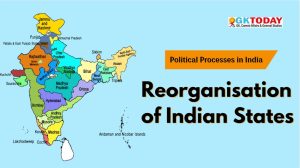
Reorganisation of Indian States – A Political Perspective [UGC-NTA NET Political Science Notes]
The reorganisation of state of India is aspect of the country’s political evolution. It reflects the need to address linguistic, cultural, and administrative disparities that emerged after independence....
Changing Nature of Public Administration in the Era of Liberalisation and Globalisation [UGC-NTA NET Public Administration Notes]
Public administration has evolved in response to the forces of liberalisation and globalisation. These phenomena have transformed the landscape of governance, influencing how public policies are formulated and...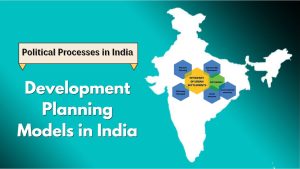
Development Planning Models in India – UGC-NTA NET Political Science
Development planning is important aspect of economic growth and social progress. It refers to the systematic approach adopted by governments to outline strategies and policies aimed at achieving...
Institutional Mechanisms for Checks and Balances in India
The system of checks and balances is fundamental to the governance structure in India. It ensures that no single entity within the government can exercise unchecked power. This...
Legislative Control over Executive [UGC-NTA NET Political Science]
Legislative control over the executive is a fundamental aspect of governance in India. It ensures that the executive branch remains accountable to the legislature, thereby upholding democratic principles....