Page-2 of Topic: Geosynchronous Satellite Launch Vehicle
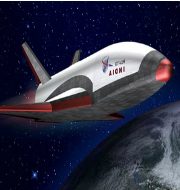
ISRO decides to use GSLV Mk-III to send Gaganyan in space by 2022
The Indian Space Research Organization (ISRO) has decided to launch `Gaganyaan — India’s first human spaceflight programme’ by 2022. The mission will aim to send a 3-member crew...ISRO successfully tests high thrust version of Vikas Engine at its Propulsion Complex (IPRC) in Tamil Nadu’s Mahendragiri
Vikas (acronym for VIKram Ambalal Sarabhai) Engine is the workhorse liquid rocket engine powering the second stage of India’s Polar Satellite Launch Vehicle (PSLV), second stage and the...PSLV versus GSLV
PSLV PSLV is designed mainly to deliver the ―earth-observation or ―remote-sensing‖ satellites with lift-off mass of up to about 1750 Kg to Sun-Synchronous circular polar orbits of 600-900...ISRO successfully launches GSAT-6A Satellite
ISRO has successfully launched GSAT-6A telecommunication satellite using the Geosynchronous Satellite Launch Vehicle (GSLV-F08) from the Satish Dhawan Space Centre (SDSC) in Sriharikota, about 110km from Chennai on...V Narayanan takes charge as new Director of ISRO’s Liquid Propulsion Systems Centre
Dr V Narayanan, a rocket propulsion expert, has taken charge as new Director of ISRO’s Liquid Propulsion Systems Centre (LPSC). He succeeded S Somanath, who has been appointed...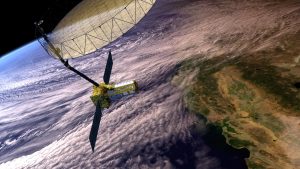
NISAR (satellite)
The NASA–ISRO Synthetic Aperture Radar (NISAR) is a joint Earth-observation satellite mission developed by the Indian Space Research Organisation (ISRO) and the National Aeronautics and Space Administration (NASA)....