Supreme Court Revives 13 Andhra Pradesh ACB Investigations
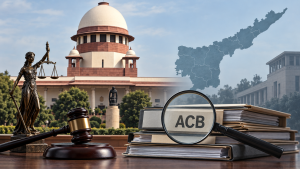
On January 8, 2026, the Supreme Court of India set aside an Andhra Pradesh High Court order quashing 13 First Information Reports registered by the state’s Anti-Corruption Bureau (ACB) under the Prevention of Corruption Act, 1988. The Supreme Court allowed the investigations to proceed.
Investigation deadline and conditions
A bench of Justices M.M. Sundresh and Satish Chandra Sharma directed the ACB to complete the investigations and file final reports within six months of receiving the judgment copy. The Court barred coercive steps, including arrest, against the accused public servants during the investigation, provided they cooperate. They may raise other issues after the investigations conclude. The Court also directed the High Court not to entertain further challenges to these FIRs or pending investigations.
Basis of the ruling
The High Court had quashed the FIRs because the ACB’s Central Investigation Unit in Vijayawada had not been notified as a police station under Section 2(s) of the Code of Criminal Procedure, 1973, after Andhra Pradesh’s bifurcation. The Supreme Court held that existing government orders and notifications, including G.O.Ms. No. 268 of September 12, 2003, declaring ACB offices police stations with statewide jurisdiction, remained in force in Andhra Pradesh under the Andhra Pradesh Reorganisation Act, 2014. The case, The Joint Director (Rayalaseema), Anti-Corruption Bureau, A.P. & Anr. Etc. v. Dayam Peda Ranga Rao Etc., was cited as 2026 INSC 37.
Important Facts for Exams
- Special-court trial: Offences under the Prevention of Corruption Act are tried by Special Judges, who may also try related offences charged in the same case.
- Investigation rank: For offences under the Act, investigations outside Delhi generally require a Deputy Superintendent of Police or an officer of equivalent rank.
- Misconduct threshold: The 2018 amendment narrowed criminal misconduct to dishonest or fraudulent misappropriation of entrusted property, or intentional illicit enrichment by a public servant.
| Related | |
|---|---|