Sattras
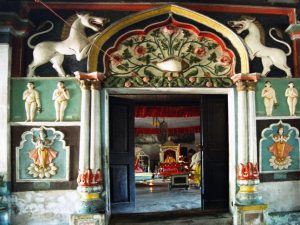
Sattras are socio-religious and cultural institutions established in Assam as part of the Neo-Vaishnavite movement. Srimanta Sankardeva and his chief disciple Madhavdeva founded these centers during the 15th and 16th centuries to propagate Ekasarana Dharma, a monotheistic stream of Vaishnavism. Sattras serve as places of worship, learning, performance arts, and community governance. Over the centuries, they have preserved Assamese classical traditions, literature, and indigenous crafts.
Historical Origin and Evolution
Srimanta Sankardeva established the first Sattra at Bordowa (Batadrava) in Nagaon district around 1494 AD. These institutions emerged as egalitarian centers aimed at reforming society by eliminating caste-based discrimination and ritualistic animal sacrifices.
The Neo-Vaishnavite movement emphasized single-minded devotion (Ekasarana) to Lord Krishna through prayer and chant (Nama-Kirtana). After Sankardeva’s death, internal ideological differences led to the division of the Sattra order into four distinct sub-sects called Sanghatis.
-
Brahma Sanghati: Founded by Damodardeva and Harideva. It allows Brahmanical rituals and caters primarily to higher caste followers.
-
Purusha Sanghati: Founded by Purushottam Thakur, the grandson of Sankardeva. It emphasizes the direct lineage and teachings of Sankardeva.
-
Nika Sanghati: Founded by Mathuradas Burha Ata and Padma Ata. It strictly adheres to pure monastic rules and discipline laid down by Madhavdeva.
-
Kala Sanghati: Founded by Gopal Ata. It focuses on egalitarian social principles and attracts followers from various indigenous tribal communities.
Architectural Layout and Physical Structure
A traditional Sattra is designed with a specific spatial layout to support community worship, administrative functions, and residential living.
Core Components of a Sattra
-
Karapat: The formal entry gate leading into the Sattra compound.
-
Naamghar: The central open-hall structure used for congregational prayers, community meetings, and theatrical performances.
-
Manikut: The sanctum sanctorum attached to the eastern end of the Naamghar. It does not house idols; instead, it holds the Guru Asana or Thapana (a raised altar), upon which the sacred text Bhagavata Purana or Nama Ghosa is placed.
-
Hati: Rows of residential quarters arranged along the perimeter of the complex. Monks (Bhakats) and celibate disciples (Keoliyas) reside in these structures.
-
Batchora: A small structure near the main entrance used as an administrative office or guest lounge.
Institutional Governance and Hierarchy
Sattras operate under a structured administrative hierarchy. Each position carries designated spiritual and operational responsibilities.
| Position | Primary Function |
| Satradhikar | The supreme administrative and spiritual head of the Sattra. |
| Deka-Satradhikar | The vice-head or designated successor to the Satradhikar. |
| Bhakats | Resident monks and lifelong devotees living inside the Hati. |
| Bhagavati | The scholar responsible for reading and explaining scriptures. |
| Pathak | The designated reader who recites texts during daily prayer sessions. |
| Gayan-Bayan | The ensemble of musicians, singers (Gayan), and percussionists (Bayan). |
Cultural and Artistic Legacy
Sattras acted as nurseries for Assamese classical music, dance, theater, and handicrafts.
Sattriya Dance
Sankardeva created Sattriya dance as a medium to render devotional stories. The Sangeet Natak Akademi granted it the status of a Classical Dance of India in November 2000.
Ankiya Nat and Bhaona
Ankiya Nat refers to single-act plays written by Sankardeva and Madhavdeva in the Brajavali language. Bhaona is the traditional theatrical performance of these plays, incorporating masks, music, and dialogue.
Borgeet and Instruments
Borgeets are classical devotional songs set to specific ragas and talas. The musical arrangements rely on instruments like the Khol (asymmetrical drum) and Taal (cymbals).
Indigenous Crafts
Sattras developed specialized crafts like Mukha Silpa (bamboo and clay mask-making) and Sanchi Pat manuscript painting using the bark of the Sanchi tree (Aquilaria agallocha). Samaguri Sattra in Majuli is famous for preserving mask-making traditions.
Major Sattras of Assam
Assam hosts over 800 Sattras, with Majuli river island serving as the primary hub of Neo-Vaishnavite culture.
-
Batadrava Sattra (Nagaon): The first Sattra established by Srimanta Sankardeva.
-
Barpeta Sattra (Barpeta): Founded by Madhavdeva; known for its unique democratic administrative practices.
-
Auniati Sattra (Majuli): Founded by Niranjan Deva in 1653 AD; famous for Palnam prayers and Tusu dance.
-
Dakhinpat Sattra (Majuli): Established under the patronage of Ahom King Jayadhwaj Singha.
-
Garamur Sattra (Majuli): Known for preserving traditional weapons and performing arts.
-
Kamalabari Sattra (Majuli): Renowned center for Sattriya dance and classical music training.
-
Samaguri Sattra (Majuli): Nationally recognized center for traditional Assamese mask-making.
Essential Facts
-
Founders: Established by Srimanta Sankardeva and his disciple Madhavdeva in the 15th-16th centuries.
-
Core Philosophy: Serves as the institutional center for Ekasarana Dharma, promoting monotheistic worship of Lord Krishna.
-
First Sattra: Batadrava Sattra in Nagaon district was the first Sattra founded by Sankardeva.
-
No Idol Worship: The Manikut contains no idols; worship is directed toward the Bhagavata Purana placed on the Guru Asana.
-
Four Sanghatis: Sattras are divided into four sub-sects: Brahma, Purusha, Nika, and Kala Sanghati.
-
Sattriya Dance: Developed inside Sattras and recognized as a classical dance form of India in 2000.
-
Language of Plays: Ankiya Nat plays are written in Brajavali, a mix of Assamese, Maithili, and Braj language.
-
Mask-Making Hub: Samaguri Sattra on Majuli island is famous worldwide for traditional Mukha Silpa (mask-making).
-
Geographical Hub: Majuli, the world’s largest inhabited river island, houses several major Sattras.
-
Geographical Indication: Majuli Mask Making and Majuli Manuscript Painting hold official GI tags.
| Related | |
|---|---|