San Francisco Garter Snake Recovery Releases 62 Captive-Bred Young
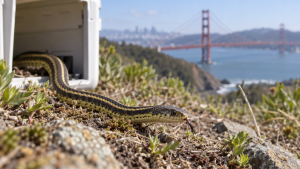
The San Francisco Zoo & Gardens announced on 10 November 2026 that 62 captive-bred young San Francisco Garter Snakes had been released into the wild. The release is the first successful head-starting conservation programme for the endangered species.
Captive breeding and release
The project began in spring 2025, when U.S. Geological Survey biologists collected 11 pregnant females from a healthy wild population in a Midpeninsula Regional Open Space District preserve in San Mateo County, California. The snakes gave birth in a controlled environment at the zoo, and the mothers were returned to their original habitat. Head-starting involves raising young animals in captivity through a vulnerable early stage before release. Before release at selected, undisclosed locations in San Mateo County, each young snake underwent genetic testing to support genetic diversity in recipient populations.
Distribution and recovery target
About one-third of the released snakes went to the areas where their mothers were collected; the rest were placed in other populations needing additional individuals and genetic diversity. Collaborators include the San Francisco Zoo & Gardens, U.S. Fish and Wildlife Service, Midpeninsula Regional Open Space District, U.S. Geological Survey, National Park Service and California Department of Fish and Wildlife. More than 130 additional young were born at the zoo in 2026 and are being raised for a planned 2027 release. The long-term recovery goal is at least 10 robust, self-sustaining breeding populations, each with a minimum of 200 snakes, to enable the species’ removal from the endangered list.
Important Facts for Exams
- Taxonomic classification: The San Francisco garter snake is a multicoloured subspecies of the common garter snake, Thamnophis sirtalis.
- Brackish-water avoidance: The snake avoids brackish marshes because its preferred prey, the California red-legged frog, cannot survive in saline water.
- Age-dependent diet: Adults feed mainly on California red-legged frogs, while newborn and juvenile snakes rely heavily on Pacific treefrogs.
| Related | |
|---|---|