Rajasthan Tightens Controls Amid Lumpy Skin Disease Reports
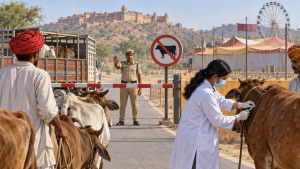
On 17 September 2026, Rajasthan’s Animal Husbandry Department tightened controls to curb lumpy skin disease in cattle, restricting their movement between districts and states.
Movement Restrictions and Fair Cancellations
The department ordered an immediate halt to animal fairs and markets across Rajasthan. The annual Beri and Todpura fairs in Sikar and Jhunjhunu districts were cancelled to reduce the risk of disease transmission through infected animals.
Surveillance and Emergency Response
The response includes enhanced surveillance, vaccination, isolation and treatment of infected cattle. Rapid Response Teams were formed at district and block levels, while 24-hour control rooms were established at state and district levels. The department reported a state-level allocation of ₹2.5 crore for medicines and emergency needs, with ₹5 lakh allocated to each district for medicines and other requirements.
Important Facts for Exams
- Virus classification: Lumpy skin disease virus is a double-stranded DNA virus in the capripoxvirus genus of Poxviridae, alongside sheeppox and goatpox viruses.
- Insect vectors: Blood-feeding insects, including mosquitoes and flies, spread lumpy skin disease mechanically; no single insect species has been identified as its vector.
- Transmission routes: Lumpy skin disease virus can spread through blood, nasal and tear secretions, semen and saliva, as well as through infected milk to suckling calves.
- Maternal immunity: Calves of immune cows acquire maternal antibodies and are generally resistant to clinical lumpy skin disease until about six months of age.
| Related | |
|---|---|