Punjab Announces 2026–27 Excise Policy
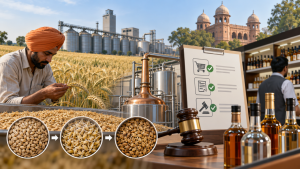
Punjab announced its excise policy for 2026–27 on 23 February 2026, setting an excise-revenue target of ₹12,800 crore and proposing measures to encourage malt manufacturing in the state.
Malt Production Plans
The policy seeks to develop a domestic production chain from barley processing to premium malt distillation. The initiative is intended to reduce reliance on external suppliers for raw spirits and foster a local farm-to-factory ecosystem.
Retail Licence Provisions
Existing retail licences may be renewed with fees increased by 6.5% over the 2025–26 charges. Retail groups that do not opt for renewal will have their licences allocated through a transparent e-tendering process.
Important Facts for Exams
- Malting sequence: Malt is produced by soaking cereal grain to start germination, then drying it with hot air to stop further growth.
- Enzyme development: Malting develops amylases that modify grain starch into sugars, as well as proteases that break proteins into forms yeast can use.
- Alcohol-tax boundary: Alcoholic liquor for human consumption is outside GST; states tax its manufacture through excise and may apply taxes such as VAT to sales.
- Malting-barley grading: Commercial malting barley is graded for germination capacity and kernel uniformity, since uneven germination can cause inconsistent grain modification across a batch.
Originally written on
February 23, 2026
and last modified on
November 19, 2026.
| Related | |
|---|---|