Odisha Announces Excise Policy for 2026–29
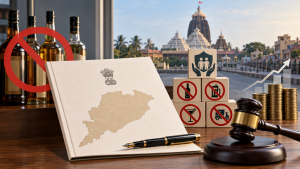
On March 26, 2026, the Odisha government announced a three-year excise policy for April 1, 2026, to March 31, 2029. It replaces the previous annual policy framework and introduces a 0.5% De-Addiction Cess on excise duty, with proceeds earmarked for establishing and strengthening model de-addiction centres across the state.
Licensing and sales controls
The policy prohibits new OFF shops, country liquor outlets and Out-Still shops across Odisha. It bars new ON shop licences in rural areas, except for three-star-and-above hotels and clubs in industrial zones, and prohibits home delivery of liquor. No liquor shops will be allowed near the Shree Jagannath Temple or along Puri’s Grand Road (Bada Danda).
Revenue, production and monitoring
The policy shifts from the Minimum Guaranteed Quantity system to a Minimum Guaranteed Excise Revenue model. It raises application fees by 10%, provides for annual licence-fee increases of 10% to 20%, and increases excise duty on Indian Made Foreign Liquor and country liquor. Out-Still units must upgrade packaging and quality-control equipment, obtain Food Safety and Standards Authority of India certification, and meet pollution-control norms; timely upgrades will receive incentives. A Track-and-trace system will monitor Extra Neutral Alcohol movement and individual bottles from production to sale. Manufacturing units and retail outlets must install CCTV linked to the Excise Commissioner’s office and district authorities. Excise chemical laboratories are also to be strengthened with modern technology and trained personnel.
Important Facts for Exams
- State taxation of potable alcohol: Alcoholic liquor for human consumption is excluded from GST under Article 366(12A), leaving states to levy excise and sales taxes on it.
- FSSAI beverage standards: The Food Safety and Standards (Alcoholic Beverages) Regulations, 2018 prescribe compositional and labelling standards; state excise licensing remains a separate regulatory layer.
- GST treatment of ENA: GST law excludes un-denatured extra neutral alcohol used to manufacture alcoholic liquor for human consumption, but industrial-use ENA remains taxable.
- ENA as spirits feedstock: Extra Neutral Alcohol is highly rectified, largely flavour-neutral ethanol used as feedstock for producing potable spirits, rather than being a finished beverage.
| Related | |
|---|---|