NITK Researchers Report Biochar–Microbe Remediation Results
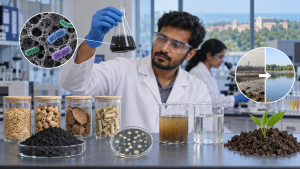
Researchers at the National Institute of Technology Karnataka (NITK) Surathkal reported laboratory results for a biochar–microbe system designed to treat contaminated soil and water. The findings and a patent secured by the research group were reported on 19 February 2026.
Laboratory remediation results
Led by Vaishakh Nair, Assistant Professor in the Department of Chemical Engineering, the team made biochar from agricultural residues including rice husks, peanut shells, coconut shells and sugarcane bagasse. It immobilised functional bacteria, including Pseudomonas stutzeri, Aeromonas veronii and Bacillus species, in biochar–microbe complexes. Laboratory tests recorded up to 92% removal of cadmium, nickel and hexavalent chromium, and up to 96% removal of pesticides such as chlorpyrifos. The systems also increased soil water-holding capacity by as much as 41.5%. These are laboratory findings, not field outcomes.
Research team and patent
Soumya Koippully Manikandan conducted the primary research under Nair’s guidance for a thesis on microbial cell-immobilised biochar for removing metal ions and pesticides from soil and water. The group secured a patent titled “Method of Developing Pseudomonas stutzeri Immobilised Rice Husk Biochar”.
Important Facts for Exams
- Pyrolysis pathway: Biochar forms through pyrolysis: oxygen is excluded, preventing combustion and producing solid char alongside liquid bio-oil and gaseous syngas.
- Porous retention: Biochar’s porous structure can retain water and water-soluble nutrients in soil.
- Strain-specific activity: Some Pseudomonas stutzeri strains have pollutant-removal activity: RCH2 reduces hexavalent chromium, while KC transforms carbon tetrachloride.
| Related | |
|---|---|