NIT Rourkela Develops Smart Wound Dressing
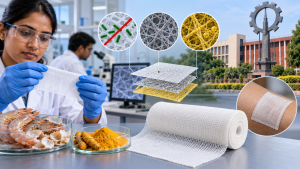
Researchers from the Department of Biotechnology and Medical Engineering at NIT Rourkela, Odisha, developed a smart cotton-gauze wound dressing. Their findings were published in the journal Emergent Materials in June 2026.
Dressing design and intended use
The dressing combines chitosan-coated gauze, an electrospun nanofibre layer and curcumin-loaded fibres. Its design aims to provide antibacterial protection and reduce adhesion, pain and tissue damage during dressing changes.
Cost estimate and next steps
The researchers estimated a commercial price of ₹50–60 for a roll measuring 10 centimetres by four metres. Professor Prasoon Kumar, Assistant Professor in the department, led the innovation. The research team plans to file a patent and collaborate with industry partners to advance the technology towards clinical trials.
Important Facts for Exams
- Chitosan source: Chitosan is made by alkaline treatment of chitin from shrimp and other crustacean shells.
- Clotting mechanism: In wound care, chitosan can bind fibrinogen, promoting platelet adhesion and blood clotting.
- Nanofibre structure: Electrospun nanofibres’ porous, high-area structure can mimic extracellular matrix and support cell attachment, proliferation and tissue regeneration.
| Related | |
|---|---|