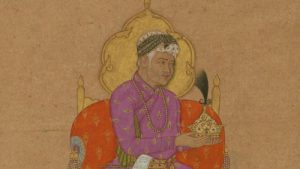
Page-10 of Medieval Indian History
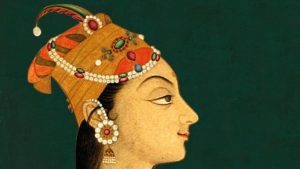
Queens of Jahangir
Emperor Jahangir (1569–1627), the fourth ruler of the Mughal Empire, reigned from 1605 to 1627 and was known for his deep love of art, culture, and refinement. His...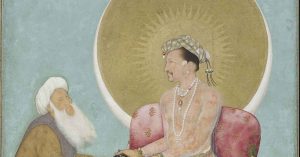
12 Decrees of Jahangir
The Twelve Decrees of Jahangir, also known as the Twelve Edicts of Jahangir, were a set of administrative and moral directives proclaimed by Emperor Nur-ud-din Muhammad Jahangir (reigned...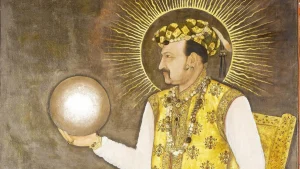
Jahangir
Jahangir, originally named Nur-ud-din Muhammad Salim, was the fourth Mughal emperor of India, ruling from 1605 to 1627. The son of Emperor Akbar and Maharani Jodha Bai, Jahangir’s...Navratnas of Akbar (9 Gems)
Akbar was an ardent admirer of art and learning. His court was full of many scholars and talented artists. The Nine most learned men in his court were...Din-i-Illahi
Din-e-Ilahi, meaning the ‘Religion of God’, was a syncretic religious doctrine introduced by the Mughal Emperor Akbar in 1582 CE. It aimed to combine the best moral and...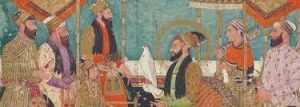
Mahzar Nama
The Mahzar Nama (Persian: Mahzar-nāma, meaning “Document of Manifestation” or “Declaration”) was a theological and political proclamation issued by the Mughal Emperor Akbar in 1579 CE. It is...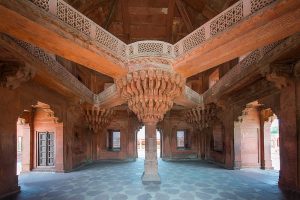
Fatehpur Sikri
Fatehpur Sikri, located about 40 kilometres west of Agra in Uttar Pradesh, is one of the finest examples of Mughal architecture and urban planning in India. Built by...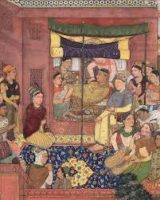
Birth of Salim
The birth of Salim, who later became the Mughal Emperor Jahangir, was a significant event in the history of the Mughal Empire. His birth not only ensured the...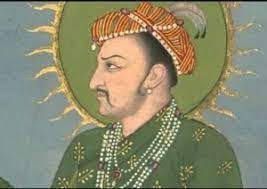
Abul Fazal
Abul Fazl ibn Mubarak (1551–1602) was a distinguished scholar, historian, philosopher, and courtier in the Mughal Empire, best known as one of the Navaratnas (Nine Gems) in the...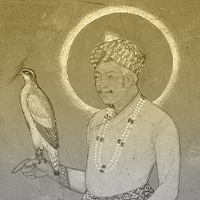
Faizi
Shaikh Abu al-Faiz ibn Mubarak, popularly known as Faizi (1547–1595), was one of the most celebrated poets, scholars, and intellectuals of the Mughal Empire during the reign of...