What are the methods used by the farmer’s organizations to influence the policy-makers in India and how effective are these methods? (UPSC 2019)
Farmer organisations in India act as pressure groups under Article 19(1)(c), using street power, lobbying and public campaigns to shape policy.
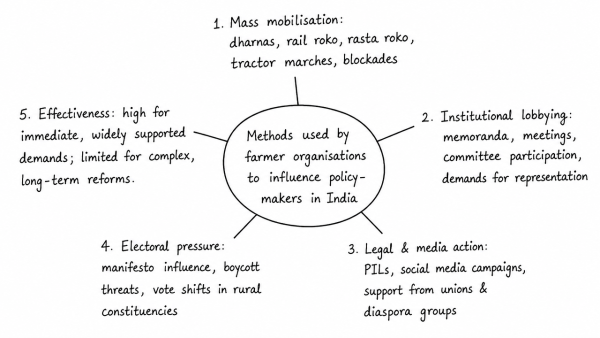
- Mass mobilisation: dharnas, rail roko, rasta roko, tractor marches and blockades create economic and political pressure.
- Institutional lobbying: memoranda, meetings with ministries, committee participation on MSP and crop pricing, and demands for formal representation.
- Legal and media action: PILs, social media campaigns, and support from unions and diaspora groups.
- Electoral pressure: manifesto influence, boycott threats and vote shifts in rural constituencies.
These methods are effective for immediate, widely supported demands, as seen in the repeal of farm laws and local concessions like loan waivers, but they are less effective for sustained reforms such as MSP guarantee, market reform and crop diversification because of uneven representation and limited follow-through.
Originally written on
September 1, 2026
and last modified on
September 1, 2026.