Point out the geographical significance of the Great Lakes system. How does hydrological interdependence necessitate cooperative transboundary water management frameworks?
The Great Lakes are a strategic freshwater system linking North America’s interior to the Atlantic via the St. Lawrence River, and supporting millions of people, trade and ecosystems.
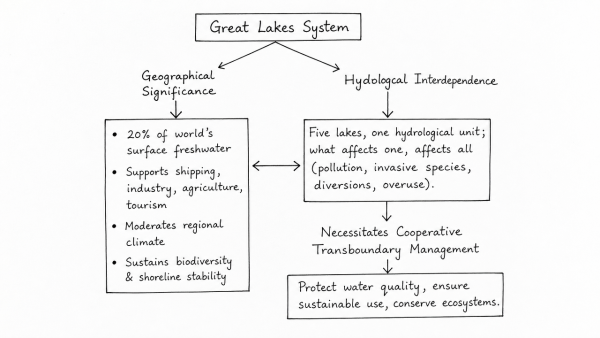
Geographical significance: They contain over 20% of the world’s surface freshwater, support shipping, industry, agriculture and tourism, and moderate regional climate while sustaining biodiversity and shoreline stability.
Transboundary management: The five lakes function as one hydrological unit; pollution, invasive species, diversions or overuse in any lake quickly affect the others through connected waters and shared aquifers.
Therefore, cooperative frameworks are needed for joint monitoring, data sharing, regulation of withdrawals and discharges, dispute resolution, and coordinated action to manage common risks like algal blooms, fluctuating water levels and habitat loss.