Explain why the prolonged reliance on Acting Chief Justices under Article 223 undermines judicial administration. How can the Memorandum of Procedure resolve this institutional delay?
Why prolonged Acting CJs hurt administration: Article 223 intends an Acting Chief Justice (ACJ) as a brief stop-gap. When it lasts long, it weakens leadership, because an ACJ may hesitate to take firm administrative or collegium decisions. This delays roster control, case allocation and supervision of subordinate courts, and can deepen vacancies, pendency and uncertainty, harming public confidence.
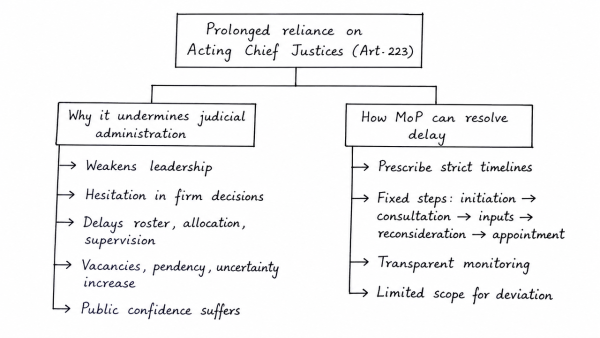
How the MoP can help: A revised Memorandum of Procedure should prescribe strict timelines for initiation, consultation, intelligence inputs, reconsideration and appointment of Chief Justices, with transparent monitoring and limited scope for executive delay or a “pocket veto”.
Thus, the MoP can ensure timely permanent appointments and keep Article 223 a truly temporary arrangement.