Discuss in the light of rising green protectionism, why bilateral mechanisms like CBAM face WTO compliance challenges. How should India leverage multilateral forums to address these trade barriers?
Rising green protectionism is turning climate policy into a trade filter. CBAM-like bilateral tools face WTO scrutiny because they can alter market access, favour domestic producers, and penalise exporters with weaker reporting capacity.
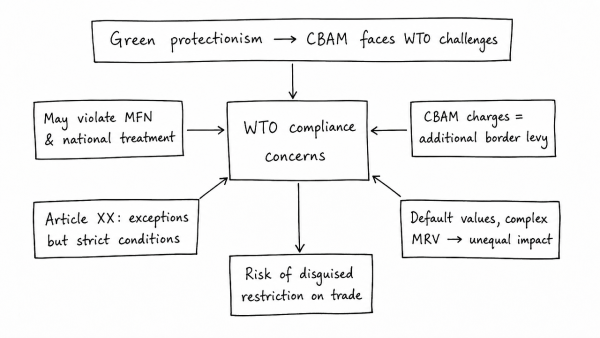
WTO compliance concerns: Such measures may violate MFN and national treatment if carbon intensity, origin, or verification practices lead to unequal treatment. CBAM charges can resemble an additional border levy beyond bound tariffs. Though Article XX permits environmental exceptions, the measure must be necessary, non-arbitrary, and not a disguised restriction on trade. Default values, complex MRV rules, and weak recognition of foreign carbon policies disproportionately burden developing countries, while their extraterritorial effect raises sovereignty concerns.
India’s multilateral strategy: India should use the WTO to demand transparency, due process, and strict review of discrimination; build coalitions with like-minded developing countries in WTO, UNFCCC, G20 and BRICS; seek recognition of domestic carbon pricing and credit mechanisms to avoid double taxation; and press for transition periods, technical assistance, and climate finance for measurement and compliance. India should also push for a fair multilateral carbon-accounting framework rooted in CBDR-RC.
India must combine coalition diplomacy, legal pressure, and domestic preparedness so climate action does not become a hidden trade barrier.