Critically examine how Bankim Chandra Chattopadhyay’s ‘Vande Mataram’ transitioned from a literary piece in *Anandamath* to a potent symbol of nationalist resistance during the Swadeshi Movement.
Bankim Chandra Chattopadhyay’s Vande Mataram began as a devotional literary composition in Anandamath, yet it later became a mass political slogan. Its journey shows how literature can acquire public power when linked to anti-colonial sentiment.
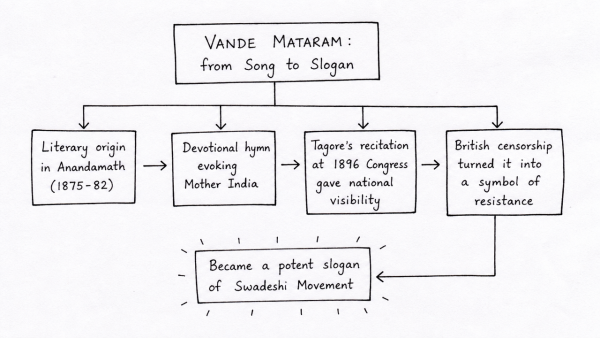
- Literary origin: Written around 1875 and published in Bangadarshan, the song was later included in Anandamath (1882), set amid the Sanyasi rebellion and Bengal famine. It evoked Mother India through a sacred, emotional image of the motherland.
- Political transformation: Tagore’s recitation at the 1896 Congress session gave it national visibility. British censorship turned it into a badge of defiance rather than devotion.
- Swadeshi phase: During the 1905 anti-partition movement, it unified protest marches, public meetings and boycott campaigns. It became a rallying cry for self-rule, self-reliance and sacrifice.
- Limitations: Its religious imagery and Hindu idiom also made it contested, especially in plural society.
Thus, Vande Mataram was not merely sung; it was politically reinterpreted, becoming a powerful symbol of nationalism, even as its inclusive reach remained debated.
Originally written on
September 21, 2026
and last modified on
September 21, 2026.