Maharashtra Sets Three-Stage Drought Assessment Process
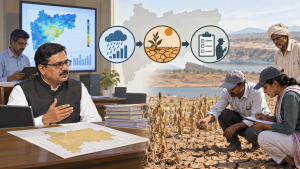
On 21 September 2026, Maharashtra Relief and Rehabilitation Minister Makarand Patil detailed the state government’s three-stage process for assessing drought conditions.
Assessment stages and criteria
The process first uses mandatory rainfall-related indices, then impact-indicating indices to assess drought intensity, followed by field surveys and verification. Assessors also consider crop damage, water and groundwater availability, fodder and drinking water conditions. Villages with more than 33% crop damage, as determined by field surveys, may qualify for a drought declaration. The Chief Minister said assistance would follow field assessments and that affected farmers would receive support.
Important Facts for Exams
- Drought categories: Drought types reflect where moisture deficits occur: precipitation, streamflow and stored water, or plant stress from evaporation and low soil moisture.
- SPI monitoring: The Standardized Precipitation Index uses precipitation data; the World Meteorological Organization recommends it for monitoring meteorological drought across climates and time periods.
- State drought declarations: In India, drought is formally declared by state governments; the Union’s drought manual provides assessment guidance but does not itself issue state drought declarations.
- Disaster relief funding: The State Disaster Response Fund is the primary state-level source for notified disaster relief; the Union’s National Disaster Response Fund supplements it for severe disasters.
Category: Maharashtra
Originally written on
September 21, 2026
and last modified on
November 20, 2026.
| Related | |
|---|---|