Maharashtra Current Affairs – September 2026
Maharashtra Politics & Governance
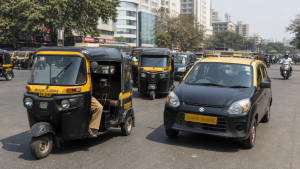
Minimum auto-rickshaw and taxi fares rise across Mumbai Metropolitan Region
1 September 2026
Revised minimum fares took effect across the Mumbai Metropolitan Region, with the first 1.5 kilometres costing ₹27 by auto-rickshaw, up from ₹26, and ₹33 by black-and-yellow taxi, up from ₹31. The Mumbai Metropolitan Region Transport Authority approved the increase, citing higher fuel prices and operating costs.
Pune district revises minimum auto-rickshaw fares
1 September 2026
Revised auto-rickshaw fares took effect across Pune district, raising the minimum fare for the first 1.5 kilometres from ₹25 to ₹30. Each subsequent kilometre now costs ₹20, up from ₹17.
The Pune District Regional Transport Authority approved the new rates. Licensed rickshaws must have their meters recalibrated; until then, drivers are required to show passengers the official fare chart.
Maharashtra Cabinet approves drug-eradication objective and other measures
1 September 2026
The Maharashtra Cabinet adopted a whole-of-government approach to its objective of eradicating narcotics by 2029 and approved a policy requiring balanced, healthy food at government and semi-government meetings, events and canteens. It declared the Solapur elevated-road project between Old Pune Naka and Boramani Naka an urgent public project, enabling government land transfer to the National Highways Authority of India.
The Cabinet also approved a revised cost of ₹5,704.50 crore for the Kukadi irrigation project, with a planned irrigation capacity of 1,44,912 hectares.
Key Facts
- The drug-eradication approach involves education, health, social welfare, youth, women and child-development departments alongside law enforcement.
- The Kukadi irrigation project is intended to expand irrigation access, with planned capacity covering 1,44,912 hectares.
Maharashtra mandates barcode and logo for authentic Paithani sarees
1 September 2026
Maharashtra made an official barcode and logo mandatory on authentic Paithani sarees to help buyers verify their origin. Scanning the barcode is intended to show whether a saree was woven by hand or on a powerloom, the quality of its silk and zari, and the weaver’s identity.
The measure is intended to distinguish authentic handloom Paithanis from imitation and semi-Paithani products. Weavers in Yeola, Nashik district, welcomed the decision.
Key Facts
- Paithani has held Geographical Indication status since 2010, recognising its distinctive origin and craftsmanship.
Maharashtra publishes draft electoral rolls after SIR
1 September 2026
Maharashtra’s Chief Electoral Officer’s office published the draft electoral rolls following the 2026 Special Intensive Revision (SIR). The draft excluded 2,06,88,487 names; this figure relates to the draft rolls, not a final determination of eligibility.
Claims and objections were scheduled to be accepted through 30 September, with the final rolls scheduled for publication on 4 November 2026. Voters were urged to check the draft and use the claims process if their names were missing.
Key Facts
- The Election Commission of India prepares electoral rolls and issues voter identification cards to eligible voters.
NCMC concession-card rollout prompts passenger complaints
1 September 2026
MSRTC’s NCMC-card requirement for women and senior citizens seeking fare concessions began on 1 September. Passengers reported difficulties with card availability, recharges and ticket-machine errors; some concession-eligible travellers said they had to pay the full fare.
Passengers sought a return to direct ticket concessions until the system worked reliably. Reports also described different recharge methods and charges.
Key Facts
- The National Common Mobility Card is a RuPay-enabled contactless card designed for payments across transport and other services.
Maharashtra gives loose edible-oil sellers a one-year transition period
2 September 2026
Maharashtra decided to pause enforcement against loose edible-oil sellers for one year, giving traditional businesses time to adapt to the applicable requirements. The state said the transition was not a permanent exemption and sellers would have to comply after the period.
The government planned committees involving the Food and Drug Administration and trader representatives to recommend compliance measures and support arrangements. The committees’ work was not reported as completed.
Key Facts
- The Food Safety and Standards Act, 2006 consolidated earlier food-safety laws into one framework for regulating food businesses.
Maharashtra outlines Kunbi-certificate measures during protest
2 September 2026
During the Maratha reservation protest, state ministers said a government draft had been submitted to protest leader Manoj Jarange Patil and that a pen drive containing data on 58 lakh records had been provided. They announced a revenue campaign from 10 to 17 September, inviting people with ...
| Related | |
|---|---|