Maharashtra Bans Junk Food Sales Near Schools
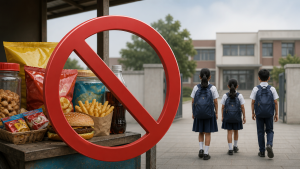
The Maharashtra Food and Drug Administration issued a compliance order on 28 July 2026 to regulate the sale, advertisement, and free distribution of High Fat, Sugar, and Salt food items near schools. The order applies within 50 metres of school premises and covers children from 22 months of age up to Class 12 students in Maharashtra.
Scope of the Restriction
The directive covers nearly 1.08 lakh schools and about 2 crore students across the state. It applies to pre-primary, primary, elementary, secondary, residential schools, hostels, and institutions affiliated with different education boards.
Food Items Covered Under HFSS Rules
The prohibited items include vada pav, samosas, ice creams, chips, sugary drinks, chocolates, and caffeinated beverages. The order also covers the advertisement and free distribution of such items within the notified school zone.
School Canteen Regulation and Compliance
All school canteens must obtain a valid licence or registration from the Maharashtra Food and Drug Administration to operate. School managements are responsible for implementation, and inspections across the state are scheduled to begin for compliance checks.
Important Facts for Exams
- High Fat, Sugar, and Salt foods are commonly called HFSS foods in public health and nutrition policy.
- The Food Safety and Standards Authority of India regulates food safety standards under the Food Safety and Standards Act, 2006.
- School food policies in India often include restrictions on junk food, sugary drinks, and packaged snacks near educational institutions.
- Childhood obesity is linked with diet-related non-communicable diseases such as diabetes and hypertension.
Health and Nutrition Context
Fresh fruits, milk, buttermilk, sprouts, traditional Indian snacks, and balanced meals are listed as preferred alternatives in school canteens. The rules apply to school-age children and adolescents in educational institutions across Maharashtra.
| Related | |
|---|---|